A new regulatory sandbox could help turn emerging construction ideas into real-world projects.
- Dubai brings construction experts together to rethink tomorrow’s building rules.
- New sandbox framework creates space for testing emerging construction technologies.
- Government and industry teams will develop practical regulatory solutions.
- Evidence from experiments could shape future building frameworks across Dubai.
Walk past a Dubai construction site today and there’s a good chance the machinery is only part of the story. Behind the cranes, concrete and glass, new questions are emerging around robotics, smart systems, digital tools and unfamiliar building methods. Dubai construction is now getting a new forum for answering those questions. It starts with testing.
Held at Emirates Towers, the first Future of Construction Legathon brought government entities, industry specialists, innovators and private-sector stakeholders into the same room to work through regulatory challenges surrounding emerging construction technologies. The format matters. Instead of discussing future ideas from a distance, participants were asked to consider how rules could work in practice.
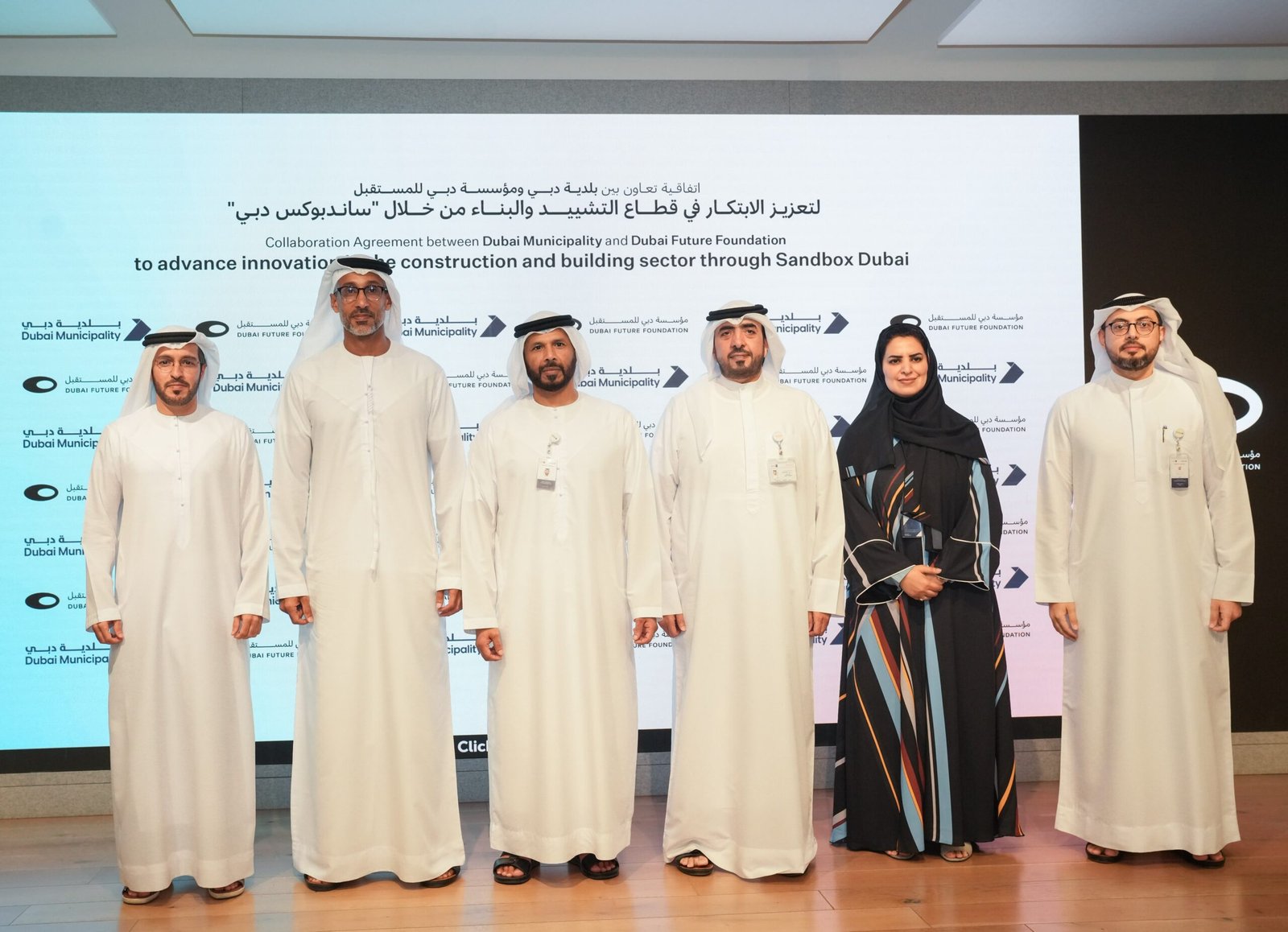
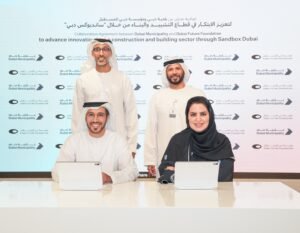
A new building method can look impressive on paper and still raise difficult questions once it reaches a live project. Dubai Municipality and Dubai Future Foundation are addressing that gap through a cooperation agreement connected to Sandbox Dubai’s Smart Built Environment framework. The idea is straightforward. Test first.
For developers and technology companies, that could mean a clearer route for demonstrating new products, services and construction systems while working within defined controls. Dubai already has a broader sandbox model that allows innovators to test solutions under adaptive regulatory supervision, with lessons feeding into future regulation.
That approach becomes particularly relevant as Dubai’s building activity keeps moving at scale. Dubai Municipality issued more than 10,700 building permits in the first quarter of 2026, while permitted built-up area reached almost 3.9 million square metres. There is plenty being built. The rules guiding how it gets built matter too.
For the people developing tomorrow’s buildings, the Legathon creates room to work through very practical questions. How should a new construction technology be assessed? Which licensing requirements need updating? What evidence should regulators see before a solution can move beyond a pilot? Those details can determine whether an idea stays experimental or reaches a real site.
Dubai has already been exploring technologies such as robotics, modular construction, 3D concrete printing, digital twins and AI across its construction ecosystem. Earlier this year, Dubai Municipality also announced a global challenge for a robot-constructed residential villa, alongside wider efforts to develop a ConTech innovation ecosystem. The direction is clear. Construction is becoming increasingly technology-led.
For residents, the impact may eventually be visible without being obvious. Smarter construction methods can influence how quickly buildings are delivered, how efficiently materials are used and how future developments operate. A regulation workshop in Emirates Towers can sound distant from everyday life. Its results may be much closer.
The cooperation will also bring innovators, start-ups, scale-ups and technology providers into workshops, training and knowledge-sharing programmes. That creates a larger conversation around Dubai’s built environment, connecting the people developing new tools with those responsible for making them work safely and responsibly.
For a city constantly adding new districts, buildings and infrastructure, the interesting question is no longer simply what Dubai will build next. It is how quickly regulation can learn alongside the technology shaping those buildings. The Future of Construction Legathon is one step towards finding that answer!