
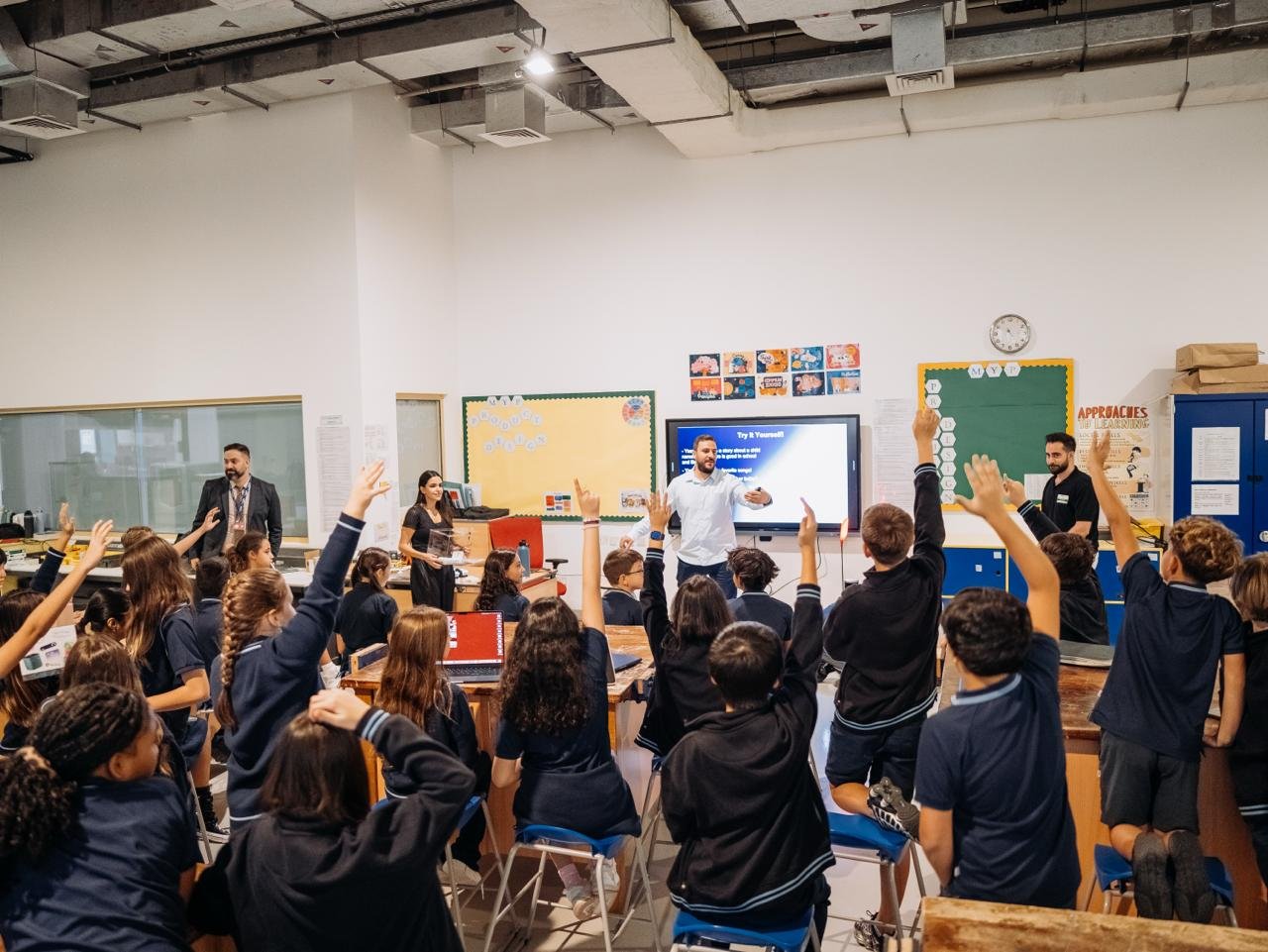
From delivery robots to bilingual voice assistants, students get hands-on with tomorrow’s technology.
- Around 50 students explored AI and robotics at GEMS World Academy.
- Yango specialists demonstrated how autonomous robots detect and avoid obstacles.
- Students tested Yango Yasmina, a bilingual Arabic-English AI assistant.
- The workshop encouraged critical thinking and responsible use of technology.
A robot navigating a busy pavement or a voice assistant answering a question might feel like everyday technology, but understanding what happens behind the scenes is another matter. For schoolchildren growing up alongside AI, that knowledge is becoming just as important as knowing how to use the tools. Yango Group is bringing that lesson into UAE classrooms, starting in Dubai.
A classroom gets far more interesting when the lesson involves a machine that can respond to its surroundings. At GEMS World Academy Dubai, around 50 students aged 10 to 12 took part in Yango Group’s first hands-on workshop, exploring how artificial intelligence and autonomous robotics work beyond the screen.
During the robotics session, students looked at how sensors and navigation software help autonomous systems detect obstacles, plan routes and react when their environment changes. Yango’s autonomous delivery robot gave the concepts a real-world reference. It also opened up a bigger question: who stays responsible when a machine makes decisions? Human oversight remains essential.
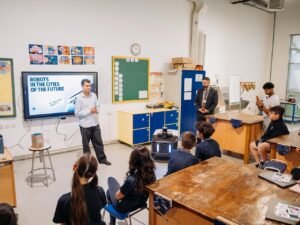
The conversational AI session brought a familiar experience into focus. Using Yango Yasmina, the company’s bilingual assistant in Arabic and English, students explored how voice assistants process spoken requests and generate replies. They also tried asking questions in different ways, discovering how the wording of a prompt can affect an answer. A useful reminder followed: AI responses still need checking.
For parents and educators, the bigger value of AI lessons may lie in what children learn to question. The UAE has been placing greater emphasis on AI literacy in schools, with national education frameworks covering how AI works, its real-world applications and the ethical responsibilities that come with it. Understanding matters as much as using it.
That distinction is central to Yango Group’s initiative. Rather than presenting technology as something that always gets things right, the workshop encouraged students to recognise its capabilities and limitations. They were asked to think about how AI and robotics might address challenges in their schools and communities, while developing problem-solving and critical thinking skills. Healthy scepticism belongs in the classroom.
Yango Group plans to take the programme to more schools and educational institutions across the UAE, inviting interested partners to explore future workshops. For students, the next useful technology lesson might begin with a simple question, followed by the confidence to challenge the answer.