A dot in an Indian manuscript became the number behind every phone and bank.
- Brahmagupta set out the first rules for zero in 628 CE
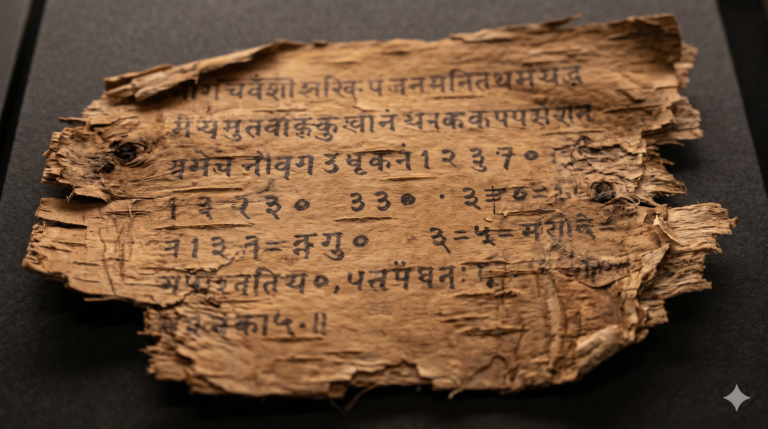
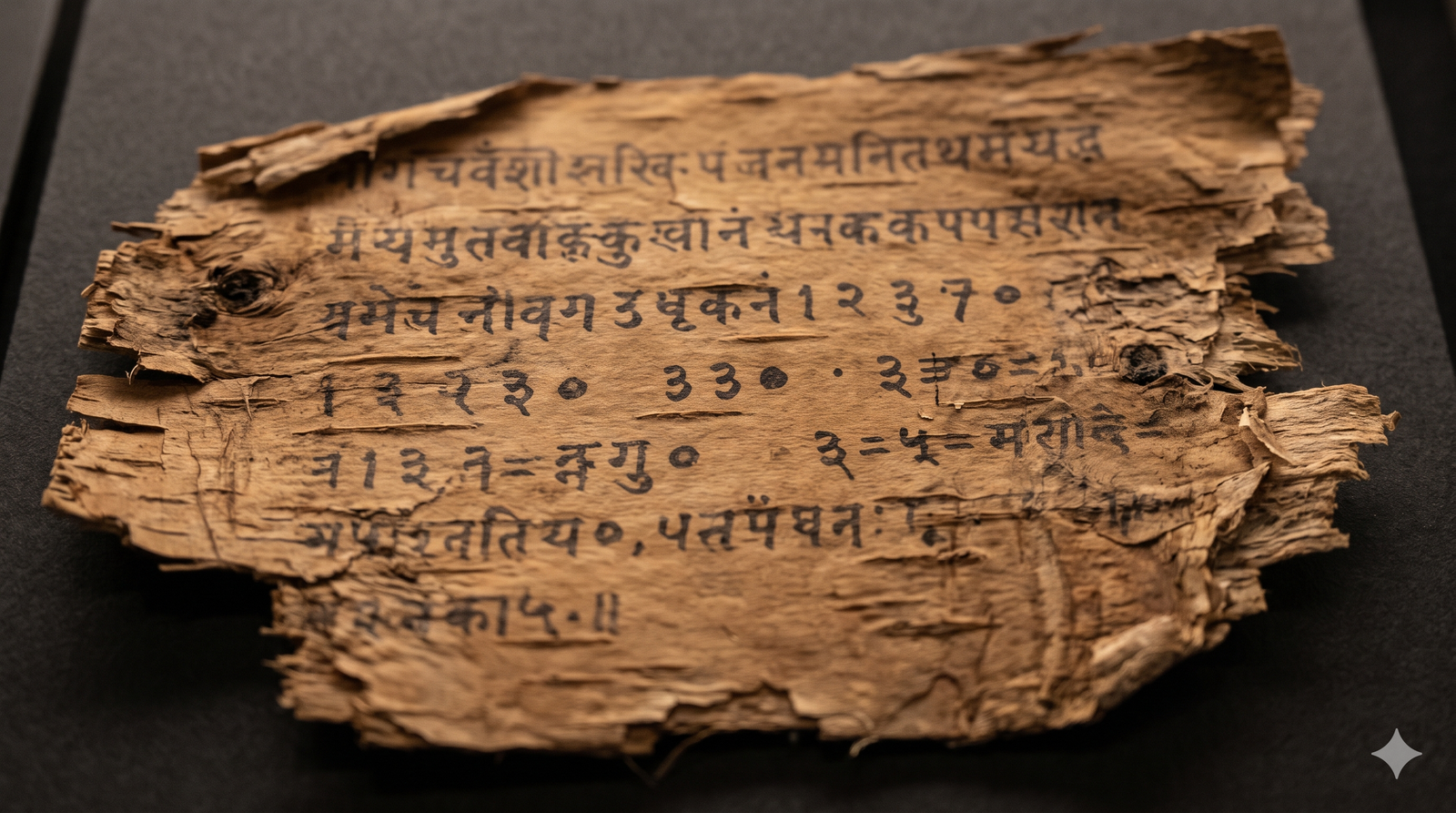
- The Bakhshali manuscript carries hundreds of zeros drawn as simple dots
- Al-Khwarizmi spread Indian numerals in Baghdad and gave algorithm its name
- Arabic sifr, meaning empty, gave English both zero and cipher
Look at the number on your phone screen, your bank balance or your Nol card. Somewhere in it sits a zero, the quietest and most powerful digit ever invented. The invention of zero did not happen in a laboratory or a Greek academy. It happened in India, over several centuries, and it reached the rest of the world by way of Baghdad.
The Invention of Zero: First a Dot, Then a Number
Zero did not arrive all at once. Placeholders came first, a mark to show an empty column, and several cultures used them. The Babylonians pressed wedges into clay. The Maya drew turtle shells. But a placeholder is only punctuation. It cannot be added, subtracted or multiplied. India’s leap was to turn that empty space into a number with rules of its own.
The oldest physical evidence is a birch bark manuscript dug up by a farmer in 1881 in the village of Bakhshali, near Peshawar, in what is now Pakistan. Its 70 fragile pages are covered in Sanskrit numerals, with hundreds of zeros drawn as simple dots. Carbon dating at Oxford in 2017 suggested the oldest pages may date to the third or fourth century, about 500 years earlier than the zero scholars had cited before. Historians still debate how to read those results, since the pages tested came out of different centuries. Either way, the idea was circulating.
The written rules came later. In 499 CE, the astronomer Aryabhata described the logic of place value in a single line: from place to place, each is ten times the preceding. In 628 CE, Brahmagupta wrote the Brahmasphutasiddhanta, the first text to treat zero as a number in its own right, with rules for adding and subtracting it. He even attempted dividing by it. Modern mathematics still declines to allow that. Brahmagupta tried anyway. Sanskrit gave the new number two lovely names: shunya, the void, and kha, the sky.

How Hindu-Arabic Numerals Reached Baghdad: From Shunya to Sifr
In the 770s, Indian astronomical texts were being translated at the court of the caliph al-Mansur in Baghdad, and the new numerals travelled with them. Half a century later, the Persian mathematician al-Khwarizmi wrote the book that carried them into the wider Islamic world, On Calculation with Hindu Numerals. He explained the ten-symbol system and credited it plainly to Indian scholars. His name survives in the word algorithm, and his other great book, on al-jabr, gave us algebra. Baghdad took a brilliant idea and made it a science.
Shunya, the empty, became sifr in Arabic. Sifr passed into Latin and Italian, shrinking into zero along the way. It also gave English the word cipher, which now means both a digit and a secret code. The Arabic-script digits on a Dubai road sign and the 0 to 9 on your phone both descend from the Indian system. Same family.
Why Europe Resisted and Zero Won Anyway
The numerals reached Europe through Arabic texts around the 12th century, and Fibonacci’s book of 1202 helped introduce them to merchants. Europe was not instantly convinced. Roman numerals were familiar, and a symbol for nothing felt suspicious. Italian authorities reportedly banned the new digits at one point, and merchants kept using them in secret. Efficiency won. Try long division in Roman numerals and you will see why.
India’s thinkers had been comfortable with emptiness for centuries, and their philosophers wrote about the void long before any mathematician gave it a symbol. Whether that mindset shaped the mathematics is still debated, but zero found a welcoming home. Today it sits at the base of binary code, the 0 and 1 beneath every app, every payment and every message you send.
Next time you check a balance or tap a Nol card, notice the zeros. Each one is a small piece of Indian mathematics, carried through Baghdad.