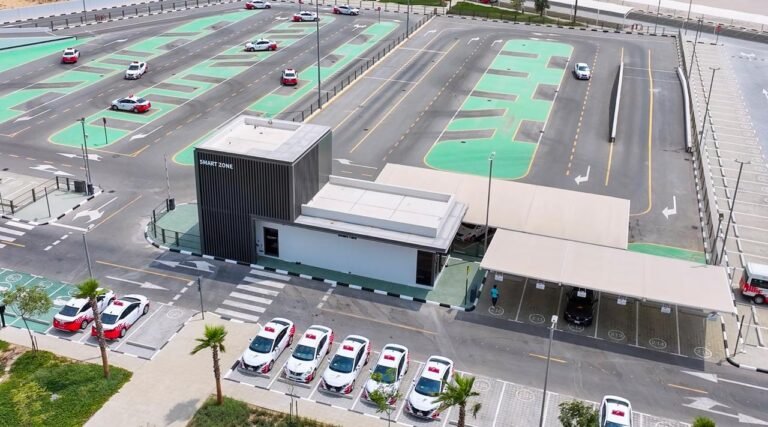
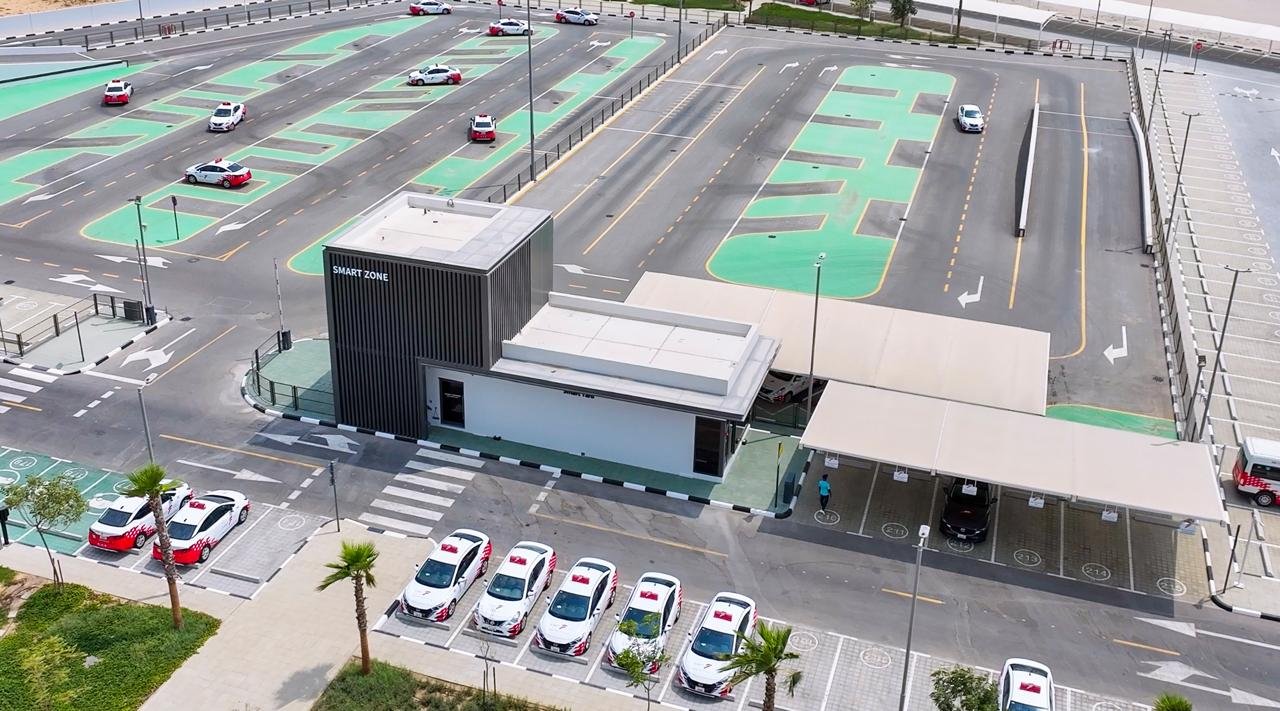
RTA’s new AI-powered system brings more precision, visual feedback and safety to learner assessments.
- AI now helps assess learner drivers against consistent testing criteria.
- Visual maps show exactly where driving errors happen.
- Smart cameras monitor mirrors, blind spots and steering habits.
- Preventive braking adds another safety layer during testing.
Few moments behind the wheel feel quite as tense as a driving test. A learner checks the mirror, adjusts the steering, watches the parking lines and tries to remember every instruction at once. In Dubai, that familiar pressure is getting a technology-led update, with the new Dubai driving test system using artificial intelligence and computer vision to make assessments more precise and easier to understand.
Instead of relying on a final result alone, the new RTA Smart Test records how the vehicle moves through the yard and analyses individual manoeuvres in real time. Every detail counts. That includes mirror checks, blind-spot awareness and hand positioning on the steering wheel, giving the assessment a much broader view of driving behaviour.
For someone waiting outside a testing yard, transparency can matter as much as the result itself. RTA’s system uses facial recognition to verify the learner’s identity, while AI calculates the test outcome against standardised criteria without human intervention. There’s less room for uncertainty.
A particularly useful feature comes after the test. Learners can replay their vehicle’s route through an interactive 3D map, with major and minor errors visually marked along the journey. Instead of wondering where something went wrong, they can see it. That can make the next training session far more focused.
Anyone practising parking in a Dubai driving school knows how quickly a small mistake can become a stressful moment. The new system adds preventive technology directly into the test vehicle, including automatic braking that can intervene if a potential collision is detected.
Real-time positioning also brings remarkable precision to the yard. Using RTK technology, the system can track the vehicle’s position to within two centimetres, helping identify errors involving parking positions, vehicle paths and manoeuvres.
For learners, that precision could make feedback more useful rather than simply more detailed. Performance data can be connected with training information, helping identify where an individual needs more practice and allowing future training to focus on specific weaknesses.
The system is also built to operate across different lighting and weather conditions, whether a test takes place during bright daylight or after sunset. Dubai’s testing environment doesn’t always look the same.
For anyone working towards a UAE driving licence, the biggest change may be the shift from simply knowing whether they passed to understanding how they performed. With AI, visual evidence and preventive safety working together, the Dubai driving test is becoming a more transparent part of the learning process. The result isn’t just a score. It’s a clearer picture of how to become a safer driver!