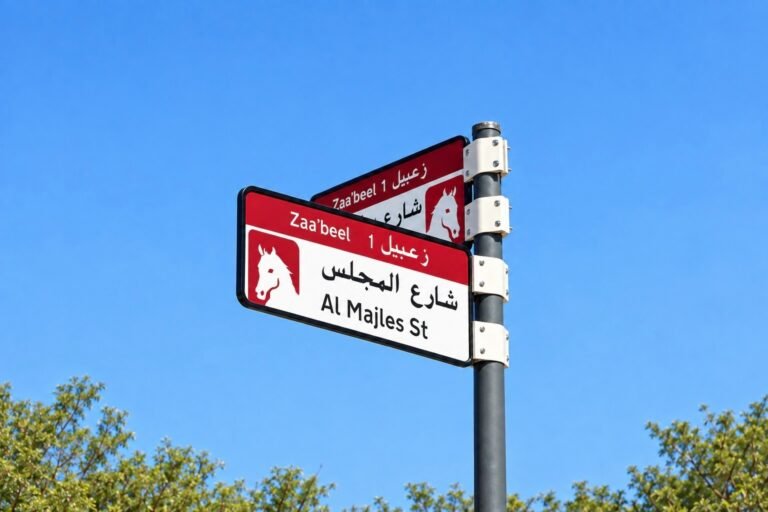
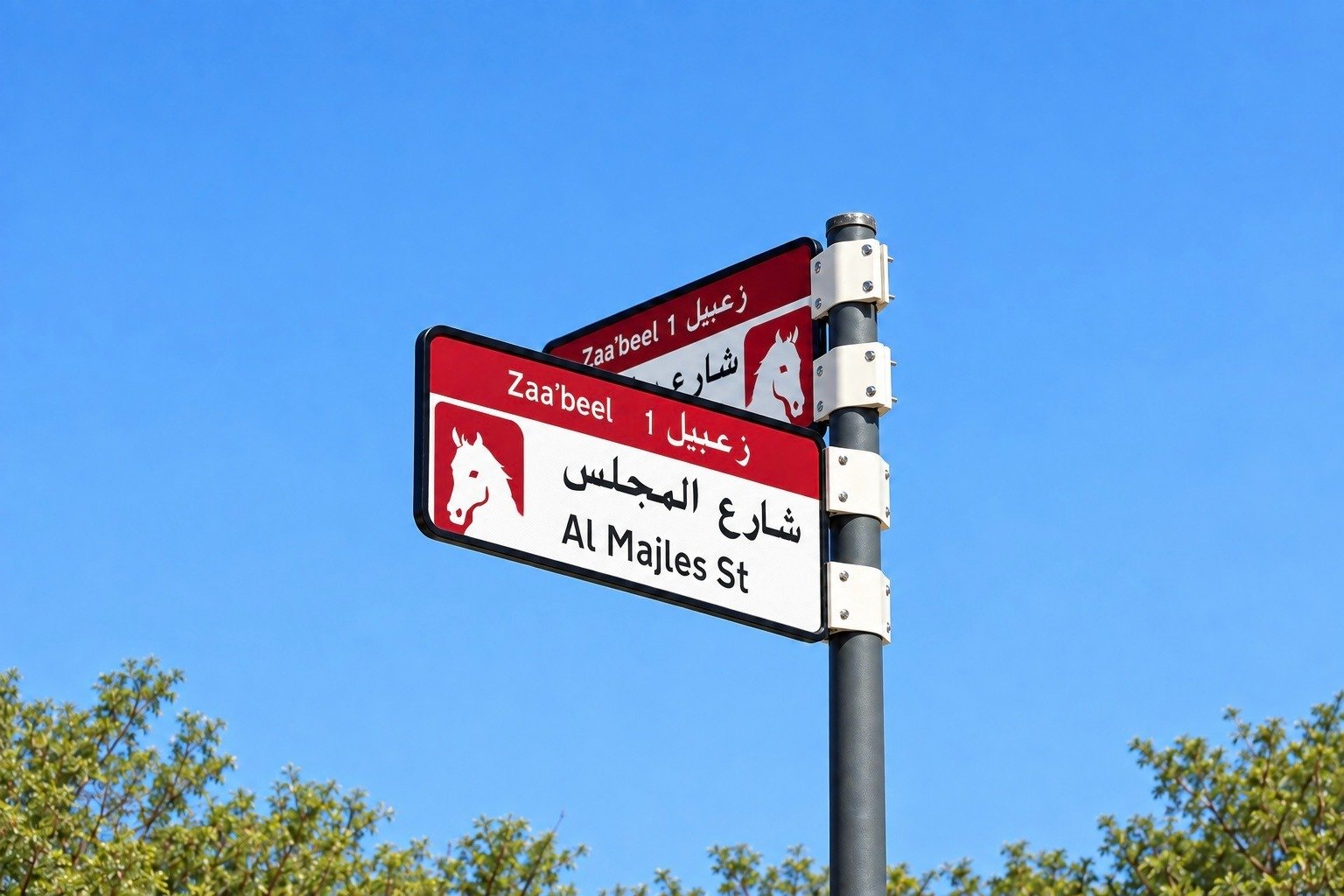
A new colour-coded design will help residents and visitors recognise neighbourhoods and find locations across Dubai.
- Five colours will give Dubai’s areas a distinctive visual identity.
- More than 2,000 signs are planned across five areas initially.
- QR codes will connect street signs with useful local information.
- Makani numbers will feature on updated property number plates.
Anyone who has tried to guide a delivery driver through a residential community, find a villa number after dark or direct visiting friends to an unfamiliar street knows how much a clear address matters. Dubai’s new addressing system is set to give those everyday directions a fresh look, combining practical navigation with colours inspired by the emirate’s geography. Small details can make a big difference.
Driving between the coast and the desert can mean moving through very different surroundings in a single afternoon. The new visual identity uses five colours to reflect the character of Dubai’s areas, with blue representing locations near the sea and gold associated with desert environments. It gives neighbourhood signs a stronger local identity.
The first phase will bring more than 2,000 new or replacement signs to Za’abeel 1, Za’abeel 2, Nad Al Sheba, Al Khawaneej 1 and Nazwa. These include area identification signs, internal street names and house number plates. The wider rollout covers 186 areas across 19 sectors, with implementation scheduled from the fourth quarter of 2026 through 2030.
For residents, visitors and people making deliveries, the details beyond the colour scheme could prove just as useful. Updated house number plates will feature each property’s Makani number alongside a QR code. That matters when a driver is looking for a specific villa or a visitor is trying to confirm an address without making another phone call.
The QR codes will offer more than directions. They are planned to provide information about area and sector names, the stories behind street names and nearby points of interest. It adds a digital layer to something people often pass without a second glance.
Future phases will extend the identity to bus stops, smart applications and area map boards. The rollout priorities will take into account population density, urban growth, busy central locations, residential and tourist attractions, and streets that have yet to receive formal addressing. The plan is phased for a reason.
For Dubai, where new residential districts, commercial destinations and visitor attractions continue to shape how people move around, street signs can do more than tell someone where they are. They can help make a place easier to understand. Keep an eye out as the first areas begin receiving their updated signs!