• Amanda Seyfried leans fully into chaos and owns every scene
• Sydney Sweeney takes time to arrive, but lands strong in finale
• Twists entertain, though many feel overly signposted early
• The film hints at camp brilliance without fully committing
Adapted from Freida McFadden’s bestselling novel, The Housemaid arrives with all the right ingredients for a deliciously twisted thriller. A glossy Long Island mansion, simmering class tension, and two women circling each other with carefully masked intentions. Directed by Paul Feig, the film promised playful danger and sharp tonal shifts. What it delivered instead was an uneven but watchable ride that only fully loosened its grip in the final act.
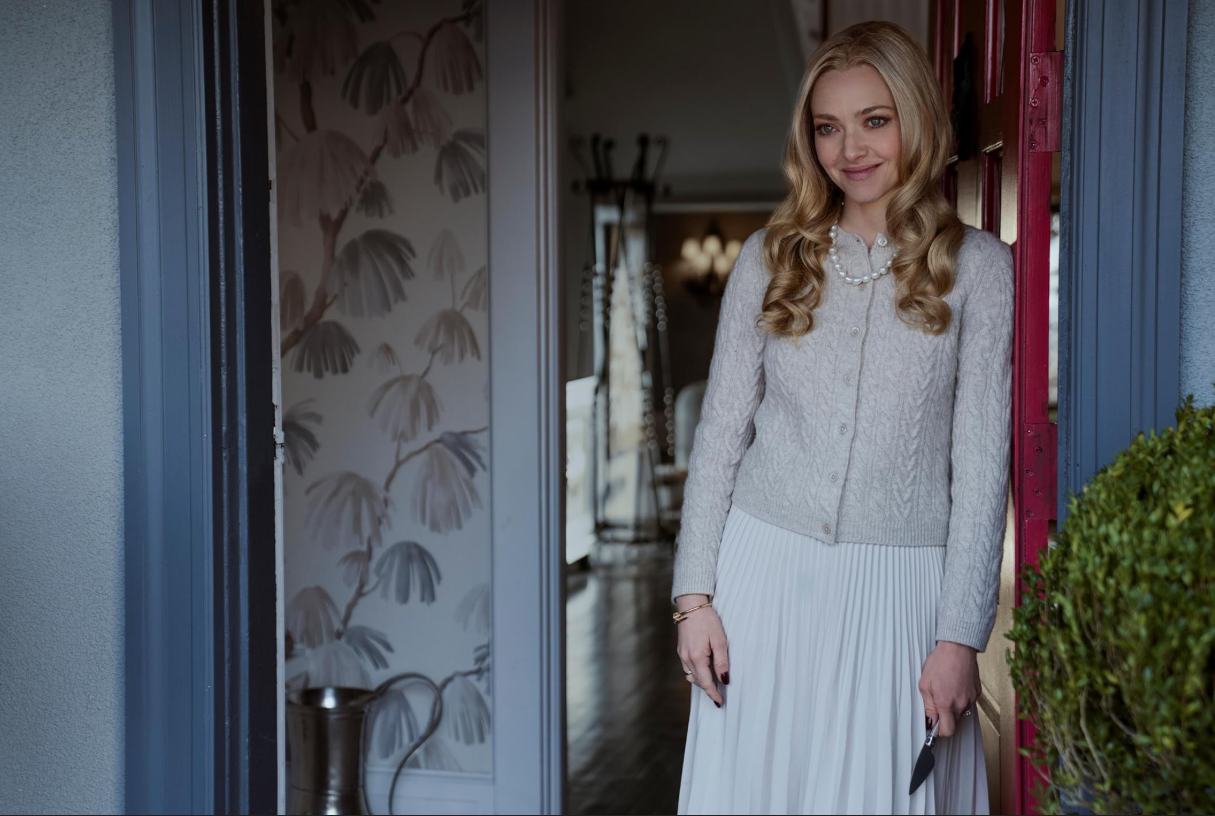
The story follows Millie, played by Sydney Sweeney, a young woman recently released on probation and desperate for stability. A live in housekeeping job with Nina Winchester, portrayed by Amanda Seyfried, seems like a lifeline. Nina is wealthy, charming, and eager to hire, offering Millie a room in her pristine white home and a chance to start over. The fantasy cracks almost immediately. Nina’s volatility surfaces through dramatic mood swings and emotional manipulation, while her husband Andrew begins showing interest that feels anything but accidental.
Feig clearly enjoys the mechanics of the thriller, leaning into reveals and reversals with confidence. Some twists land with genuine impact, while others arrive so loudly foreshadowed that the audience can see them coming well in advance. Rebecca Sonnenshine’s screenplay keeps the class divide front and center, framing Millie’s willingness to tolerate discomfort as a consequence of financial desperation rather than naivety. That thematic grounding gives the film weight, even when the plot strains for shock.

Tonally, the film struggles in its first half. It plays more like a restrained domestic drama than the pulpy thriller it wants to be. Seyfried, however, seems to be acting in a different and far more entertaining movie. Her Nina is gloriously unhinged, cycling through brittle smiles, tearful collapses, and icy menace with theatrical commitment. She understands the assignment completely and elevates every scene she touches.
Sweeney’s performance is far quieter by comparison. For much of the runtime, Millie feels muted, almost passive, until the film’s final stretch when her character pivots sharply. When that shift comes, Sweeney finally matches the energy of the story, delivering a performance that suggests how much more fun the film could have been had it leaned into this tone earlier. Brandon Sklenar’s Andrew functions mostly as a narrative device, pleasant until he is not, offering little depth beyond his role in the central power imbalance.
The Housemaid finds its footing in the final third, when it embraces bad behavior, heightened emotions, and stylish confrontation. The foreshadowing fades, the performances sharpen, and the film allows itself moments of messy indulgence. While uneven editing and occasionally clunky dialogue pull it back from greatness, the payoff is entertaining enough to forgive the hesitation.
Ultimately, The Housemaid is a thriller that improves the moment it stops playing it safe. It may not be as campy or daring as it could have been, but watching well dressed suburban women unravel in pursuit of control remains a satisfying spectacle!