
- Magnesium was the fastest-growing supplement of 2025 with a 1,158% adoption rate
- The mineral supports over 300 biochemical reactions in the body
- The form you take matters more than most people realise
- Food-first is still the gold standard, but deficiency is more common than you think
If you’ve been on wellness TikTok lately, or honestly just in a group chat with at least one health-conscious friend, you’ve probably heard someone mention magnesium. Not in a vague “eat your greens” kind of way either. We’re talking specific: magnesium glycinate for sleep, magnesium citrate for digestion, people comparing forms like they’re discussing wine vintages.
So what’s going on? Is this another wellness fad destined to share shelf space with dusty collagen powders and half-finished greens blends? Or is magnesium actually having a legitimate moment?
Turns out: a bit of both, honestly.
Magnesium saw a 1,158% adoption rate year to date in 2025, with nearly 190,000 users adding it to their routines since January, a net increase of 874.6%, making it the fastest-growing supplement of the entire year. That’s not a niche trend. That’s a cultural shift.
And it maps perfectly onto Dubai’s wellness boom. Between the rise of IV drip lounges, cold plunge clubs, and biohacking cafes popping up across the city, residents here are increasingly invested in doing more for their bodies than just hitting the gym and calling it a day. Magnesium fits right into that world. It’s accessible, relatively affordable, and backed by actual science. That combination is rare in the supplement space.
So what does magnesium actually do?
Here’s where it gets genuinely interesting. Magnesium is responsible for more than 300 biochemical reactions in the body, regulating nerves, bones, the immune system, and blood sugar levels. It keeps your heartbeat steady, assists in energy production, and helps with protein synthesis. Basically, it’s doing a lot of the behind-the-scenes work your body depends on.
Despite those functions being well-established, nearly half of adults worldwide are deficient in magnesium, and the gap widens with age. And this isn’t entirely our fault. Over the past 60 years, intensive farming practices have depleted mineral content in soil significantly, with magnesium dropping by as much as 30%. On top of that, western-style diets heavy in processed food can deplete magnesium by up to 80 to 90% through the refining process.
Living in the UAE, where processed and convenience food is everywhere and chronic stress is basically a personality trait at this point, the conditions for deficiency are pretty much ideal.

Why everyone suddenly has a favourite “form”
This is where the conversation gets a little nerdy, but stick with me, because it’s actually useful.
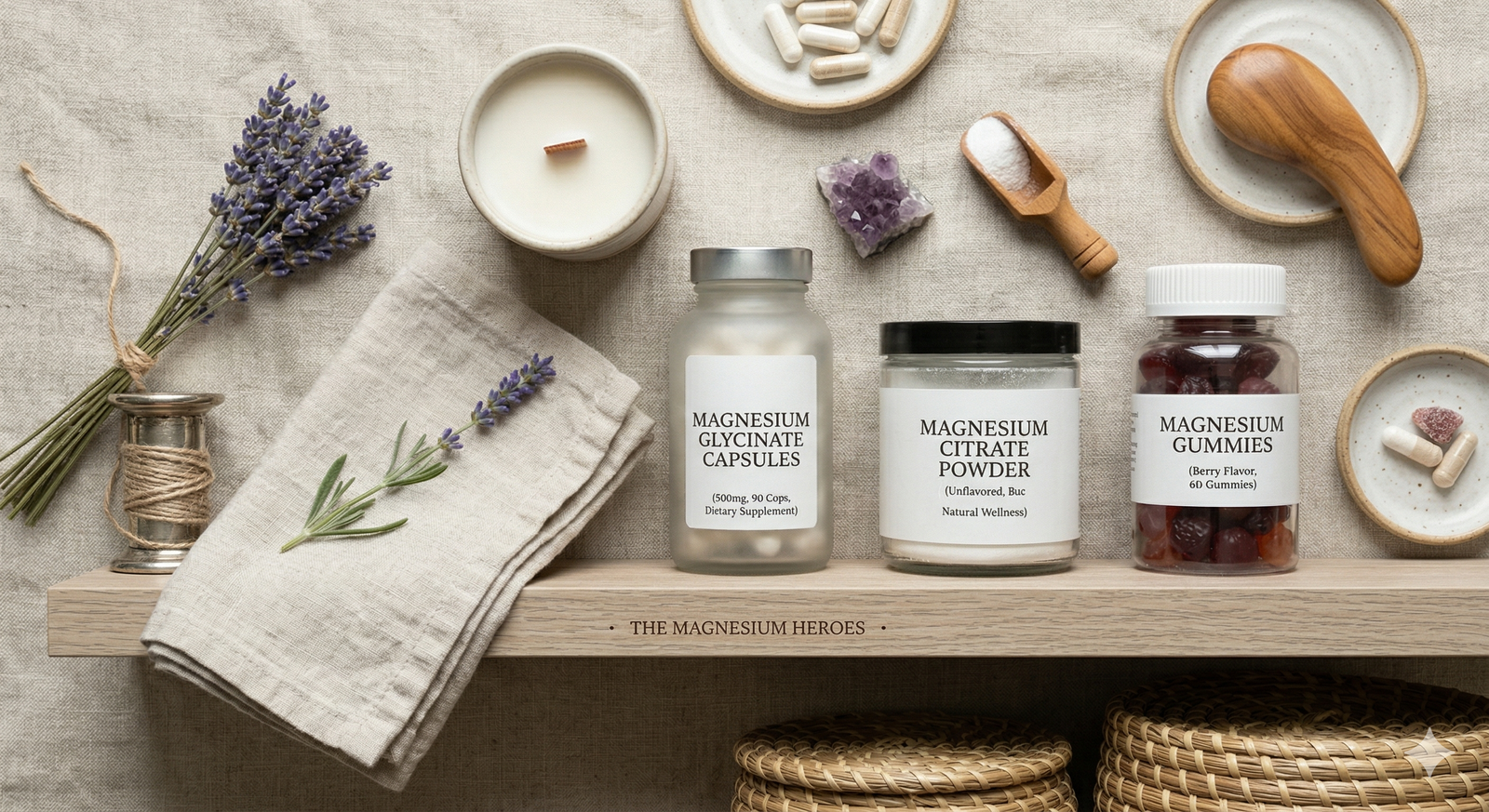
Not all magnesium supplements are the same. Magnesium glycinate has grown in popularity for its calming effects and is generally considered the best choice for people looking to fill dietary gaps without a specific health concern. It’s well-absorbed and gentle on the stomach. It’s the one most people mean when they talk about taking magnesium for sleep. Magnesium citrate appears more often in research focused on metabolic health and digestive function, which is why it’s the one that went viral for, shall we say, getting things moving. And magnesium taurate has shown up in cardiovascular research, with some scientists flagging it as a potentially protective supplement for vascular health.
The takeaway? If someone online is raving about magnesium helping their sleep, they’re probably taking glycinate. If someone else had a very dramatic bathroom experience, they were almost certainly on citrate. Context matters.
But does everyone actually need it?
Here’s the honest answer: maybe. Harvard Health notes that the benefits of magnesium supplements are largely oversold for the general population, and that most people get enough through diet. If you’re eating leafy greens, nuts, seeds, legumes, whole grains, and yes, dark chocolate, you might be fine.
But if you’re not sleeping well, dealing with persistent muscle cramps, feeling chronically wired-but-tired, or eating on the run most days, it could be worth exploring. The smarter move before reaching for a supplement is getting a blood test to check your actual levels. Your GP can sort that out quickly.
Experts also warn that quality varies wildly, with many products quietly using cheaper, less effective forms like magnesium oxide rather than glycinate, and without a Certificate of Analysis or third-party testing, you’re largely taking the brand’s word for it. So if you do decide to try it, do a little label reading first.
There’s something particularly fitting about this trend landing here. Dubai is a city that runs hot, literally and figuratively. The summer heat accelerates mineral loss through sweat. Work culture often means late nights and early starts. Social life is full-on. And the pace of everything means a lot of us are running on stress hormones more often than we’d like to admit.
In the Middle East, there’s been a renewed interest among young professionals in wellness products, and magnesium fits neatly into that shift away from extreme fitness trends and toward smarter, more sustainable self-care. It’s not a miracle mineral. But for a lot of people in this city living this kind of life, it might be exactly the quiet, unglamorous support their body’s been waiting for!