
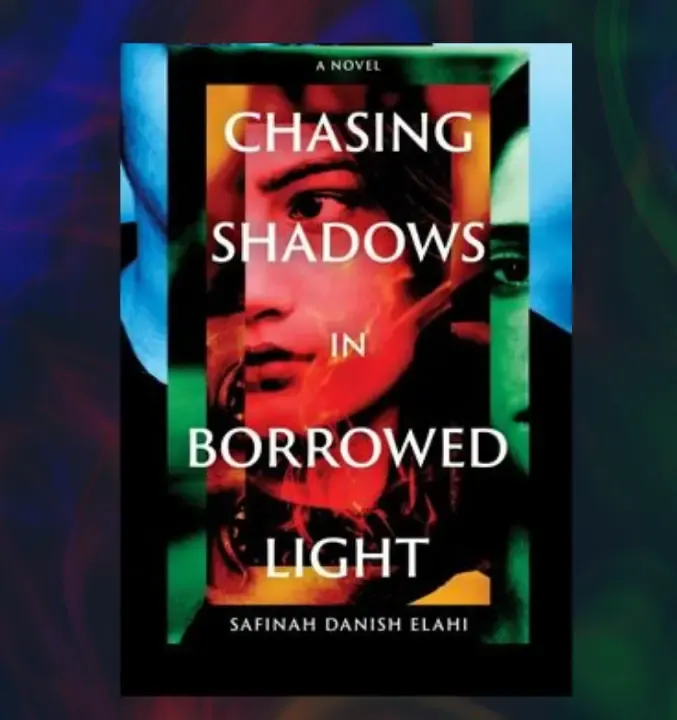
Safinah Danish Elahi’s third novel explores trauma, identity, and expatriate belonging with quiet and assured literary power.
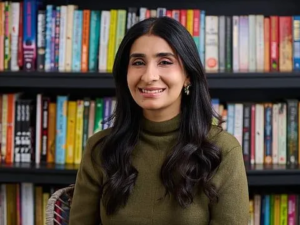
- Safinah Danish Elahi is a lawyer, poet, novelist, and founder of Reverie Publishers Pakistan.
- The novel follows four Karachi friends reuniting across continents decades after a shared trauma.
- Dawn praised it as capturing Pakistani expatriate life without relying on stereotypical assumptions.
- Elahi’s previous novel The Idle Stance of the Tippler Pigeon was shortlisted for the Asian Fiction Prize.
There is a particular kind of ache that belongs to people who grew up in one city and built their adult lives in another. Safinah Danish Elahi’s novel urges readers to prioritise their psychological wellbeing while also recognising the debilitating weight of emotional trauma, and she does so through four characters whose shared Karachi adolescence left marks that no amount of distance or reinvention has fully erased. Chasing Shadows in Borrowed Light, her third novel and fourth book, is the kind of quiet literary fiction that arrives without fanfare and stays with you for weeks afterward, pressing gently on the places you thought had healed.
The plot is deceptively simple yet layered. Saira, Ashar, Usman and Areen once lived in Karachi, the city of their teenage triumphs, rebellions and emotional catastrophes. Now, three of them have fashioned new homes for themselves in Australia, while the fourth remains tethered to the city that shaped them all. The reunion that the novel builds toward is not dramatic in the conventional sense. There are no confrontations that shatter the room. There is instead the slower, more honest reckoning of adults who have spent decades carrying something they never properly addressed, returning to each other across the distance that geography and time have placed between them. It is the kind of story that rewards patience and resists the impulse to dramatise what is, at its core, an entirely interior crisis.
This new work adopts a multi-character perspective with each character’s viewpoint filtered through a detached third-person voice rather than an immersive first-person perspective, a stylistic shift that constructs a barrier between the characters and readers, thereby lending an aura of mystery to the narrative. This is a deliberate and effective choice. Elahi is not interested in giving you complete access to her characters. She is interested in showing you how little access people have even to themselves, how much of what drives behaviour remains unexamined until something, or someone, forces the examination. The prose is measured and precise, occasionally luminous, and consistently respectful of the complexity it is handling. Beyond its focus on the psychological journey of its cast, Chasing Shadows in Borrowed Light captures the complexities of Pakistani expatriate life without relying on stereotypical assumptions, carrying faint echoes of Kamila Shamsie’s Kartography, though stripped of its political dimensions, emerging instead as a more personal glimpse into the lives of ordinary Karachiites grappling with childhood trauma and their complex relationship with home amid the pressures of globalisation.
For UAE readers, and particularly for the South Asian community that forms such a significant part of Dubai’s cultural fabric, this novel will resonate in ways that go beyond literary appreciation. The experience of loving a home city from a distance, of maintaining relationships that were formed in youth and must somehow survive the divergent trajectories of adult life, and of carrying emotional histories that were never quite resolved before the distances grew too large to close easily, is not an abstract theme here. It is the lived experience of a significant portion of this readership, told with the kind of literary honesty that only someone who has genuinely understood that experience from the inside could produce. Elahi has earned her MFA in publishing and contemporary fiction from Emerson College in Boston and founded Reverie Publishers, an award-winning independent publishing house in Pakistan, and both the craft and the publishing vision behind this novel reflect someone who takes the act of telling Pakistani stories seriously and with considerable skill.
Chasing Shadows in Borrowed Light is not the most urgent novel you will read this year. It will not grip you from the first page and refuse to let go. But it will do something more lasting. It will sit quietly in the back of your mind and ask questions that you will find yourself answering slowly, long after you have closed it. For anyone who has ever called two places home simultaneously and felt the particular loneliness of belonging fully to neither, this is the novel that understands you!