
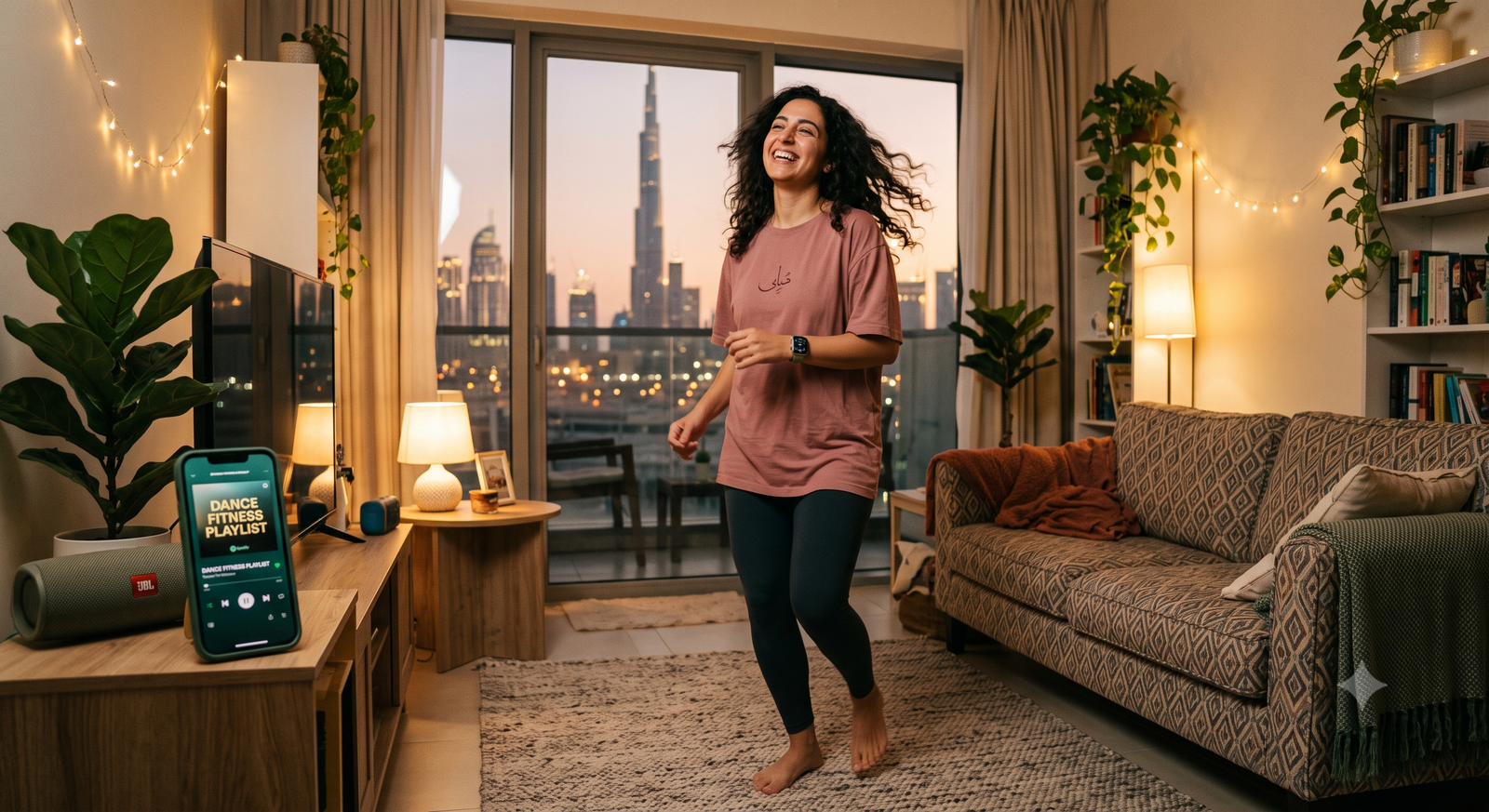
The workout that makes you forget you are working out is back and the science behind it is genuinely impressive.
- Dance cardio activates dopamine and serotonin simultaneously, unlike most conventional workouts.
- Studies show dance fitness improves cognitive health by keeping the brain constantly engaged.
- Dubai’s air-conditioned studio culture makes dance cardio the ideal peak summer workout.
- Dance workouts are the fastest growing fitness category globally in 2026 by new participant numbers.
There is a specific kind of joy that happens when a song you love comes on and your body moves before your brain has time to think about it. That involuntary response, the one that bypasses the part of you that calculates calories and tracks splits and checks heart rate zones, is precisely what dance fitness has always understood and what the rest of the fitness industry is only now catching up to. Dance fitness Dubai is having its biggest moment in years, with studios across the city reporting significant increases in class bookings as residents rediscover the simplest truth in exercise: you will always show up for something that makes you feel good. And right now, in peak Dubai summer when the gym feels like a chore and outdoor movement is genuinely off the table, that truth matters more than ever.
Why Dance Cardio Does More for Your Brain Than Your Gym Session
The science behind dance fitness has moved well beyond the simple acknowledgement that it burns calories. Dance cardio is unique among exercise formats because it engages the brain continuously throughout the session in a way that running on a treadmill or lifting weights in a fixed pattern simply does not. With dance cardio, your brain is always switched on, thinking about what the next step is, which activates neural pathways associated with memory, coordination, spatial awareness, and cognitive flexibility simultaneously. This dual engagement of body and mind produces neurological benefits that conventional cardio formats cannot replicate, with research consistently showing that regular dance exercise reduces the risk of cognitive decline more effectively than walking, cycling, or swimming at equivalent intensities. For UAE residents navigating the mental fatigue of peak summer, that cognitive engagement is not a side benefit. It is the whole point.
The mood chemistry of dance fitness is equally compelling and specific. Exercise in general releases endorphins, but dance specifically triggers simultaneous releases of dopamine, serotonin, and oxytocin, the last of which is generated by the social and synchronised movement aspects of group dance classes in ways that solo exercise cannot produce. This biochemical combination is why people describe leaving a dance cardio class feeling fundamentally different from how they feel after a standard gym session. It is not just the exercise. It is the music, the movement, the shared rhythm with other people in the room, and the specific neurochemical cocktail that combination produces. A massive shift away from alcohol-centred socialising to connection-driven wellness is reversing the solitary nature of many modern fitness routines, creating spaces where health, culture, and community intersect, and dance fitness is the most natural expression of that shift available to Dubai residents right now.
The practical landscape in Dubai is strong and growing. Studios across Jumeirah, Dubai Marina, Al Barsha, and Business Bay are offering everything from classic Zumba and Latin dance cardio to K-pop choreography classes, African dance fitness, and high-energy Bollywood workouts that play directly to the city’s extraordinarily diverse cultural mix. Many studios offer beginner-friendly formats specifically designed for people who believe they cannot dance, which is the single most common barrier to entry and the least valid one. Dance cardio classes require no prior dance experience, no coordination benchmark, and no performance standard. They require only a pair of trainers, a willingness to move, and the specific kind of courage it takes to stop caring what you look like for 45 minutes. That courage, it turns out, is also excellent for your mental health.
For UAE residents who have been grinding through summer gym sessions out of discipline rather than desire, and who are arriving at Monday mornings depleted rather than energised, dance fitness offers a genuinely different relationship with exercise. Wellness in 2026 is shifting decisively away from punishment-based movement toward joy-based movement, and the evidence is clear that joy-based movement produces better long-term adherence, better mental health outcomes, and comparable physical benefits to conventional formats. You do not have to earn your workout. You just have to enjoy it enough to keep showing up.
This Monday, find a dance cardio class in your area, book the 6 PM session after work, and give yourself 45 minutes of movement that does not feel like medicine. Your brain, your heart, and your mood will all respond to it in ways that the treadmill never quite managed!