A first-of-its-kind certification puts camel care and responsible dairy production in focus.
- Camelicious becomes the first camel farm globally certified under NSF’s programme.
- The independent audit covers health, housing, handling, feed and water.
- The certificate was presented during Dubai’s food safety conference.
- The milestone brings international attention to UAE camel-farming practices.
A carton of camel milk carries more than a familiar taste of the region. It also represents the work behind every farm, from veterinary care to the daily handling of the animals. For the UAE’s camel dairy sector, those practices are receiving fresh international attention. Camel milk UAE has reached a notable welfare milestone, with Camelicious becoming the first camel farm worldwide to earn NSF Global Animal Wellness certification.
Camel milk has travelled a long way from its place in traditional diets to supermarket shelves and international markets. The standards behind its production are evolving too. In February 2026, the UAE secured approval for a proposal to develop the first international Codex standard for pasteurised camel milk, addressing product authenticity and consistent quality requirements.
Animal welfare begins long before milk reaches a bottle. It is reflected in the space animals are given, the way they are handled, the quality of their feed and water, and the veterinary attention they receive. Camelicious has now had these areas assessed against NSF’s Global Animal Wellness Standards, becoming the first camel farm globally certified under the programme.
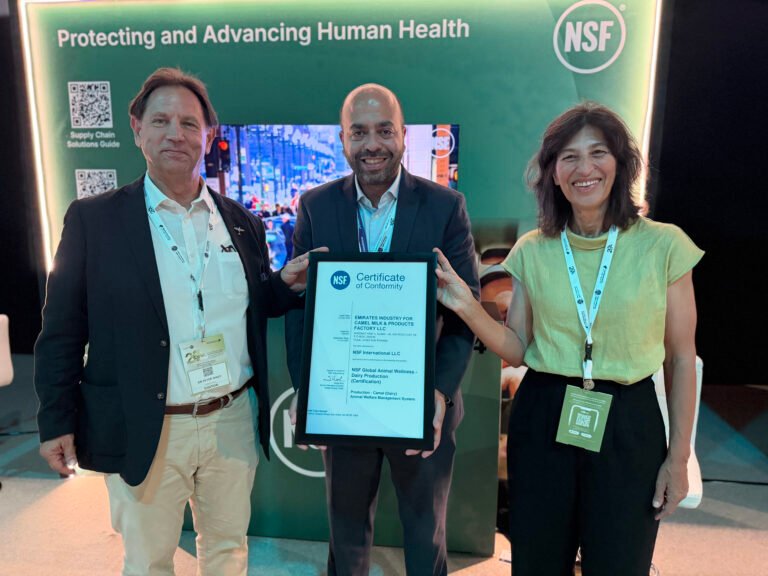
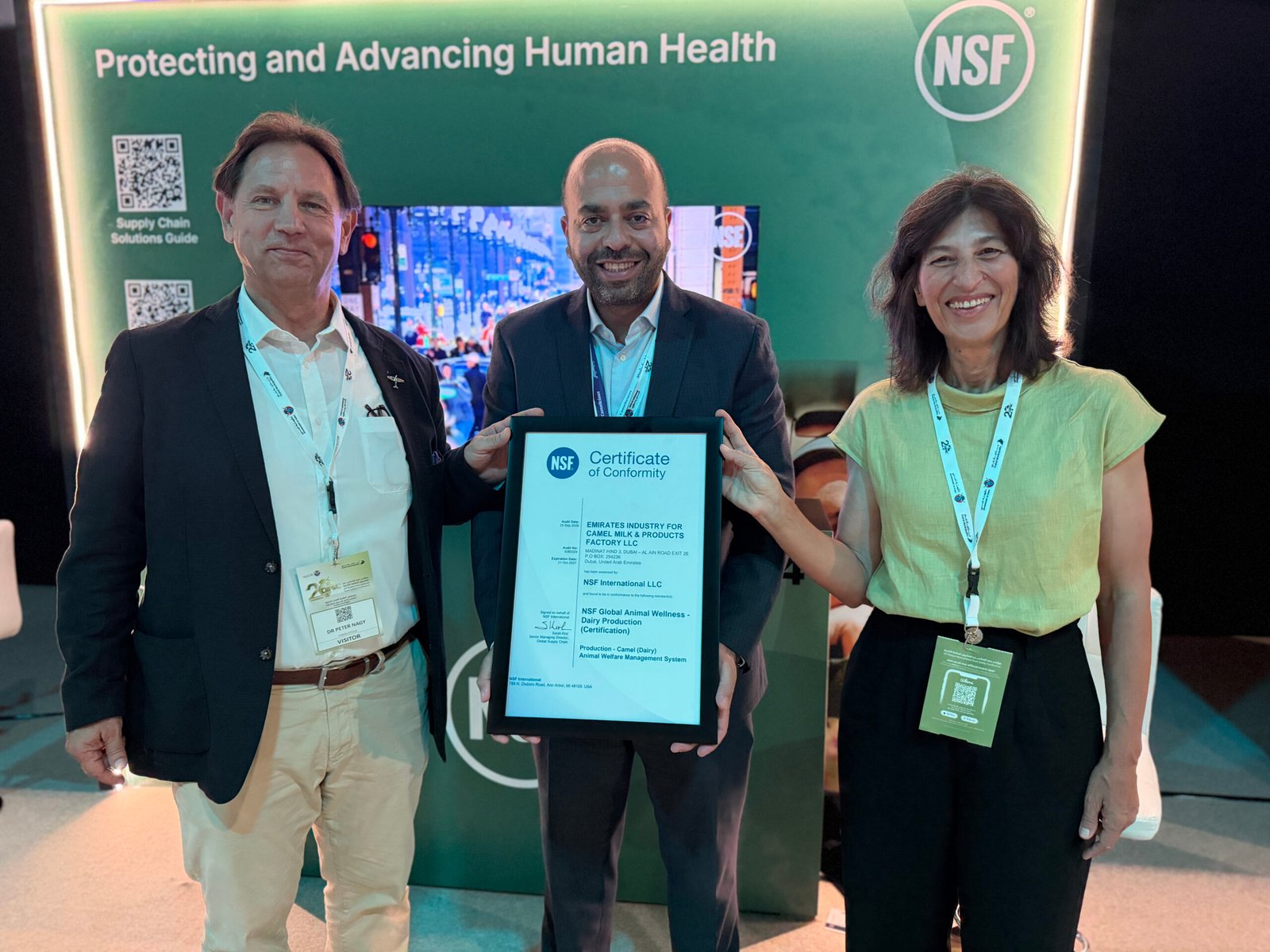
The certificate was handed over on 17 November during the Dubai International Food Safety Conference, which brought food-sector specialists and regulators to the city. Camelicious representatives Hesham Yehia, Dr Peter Nagy and Dr Jutka Juhasz received the recognition from NSF representatives, with Dubai Municipality officials also present. A local milestone, on an international stage.
For shoppers, the value of a welfare certification lies in knowing what sits behind the product. NSF says its independent audit examined camel health, housing, handling, feed and water. Those checks give buyers and consumers a clearer picture of farm practices, rather than asking them to rely on a broad promise about animal care.
There is a wider UAE story here. Camel farming remains connected to the country’s agricultural heritage, but the sector is also working with modern veterinary expertise and international frameworks. The country’s push to establish a global standard for pasteurised camel milk and Camelicious’ new welfare certification address different parts of the same conversation: product standards on one side, animal care on the other.
The achievement also gives greater visibility to a species that has received less attention in international animal-welfare certification programmes. For Camelicious, it places farm management and veterinary care at the heart of its next chapter. For the wider industry, it offers a benchmark to consider. The next step is keeping those standards meaningful every day.