The weekly hypermarket run is quietly disappearing across Dubai, Riyadh, and Doha, and it’s not just about laziness.
- Grocery is now the single biggest category across Gulf quick commerce apps
- The old Friday hypermarket trolley run is fading into a once-a-month backup habit
- Saudi’s dark store scene went from a Riyadh pilot to nationwide in under five years
- Speed has trained an entire region to expect groceries in under 30 minutes
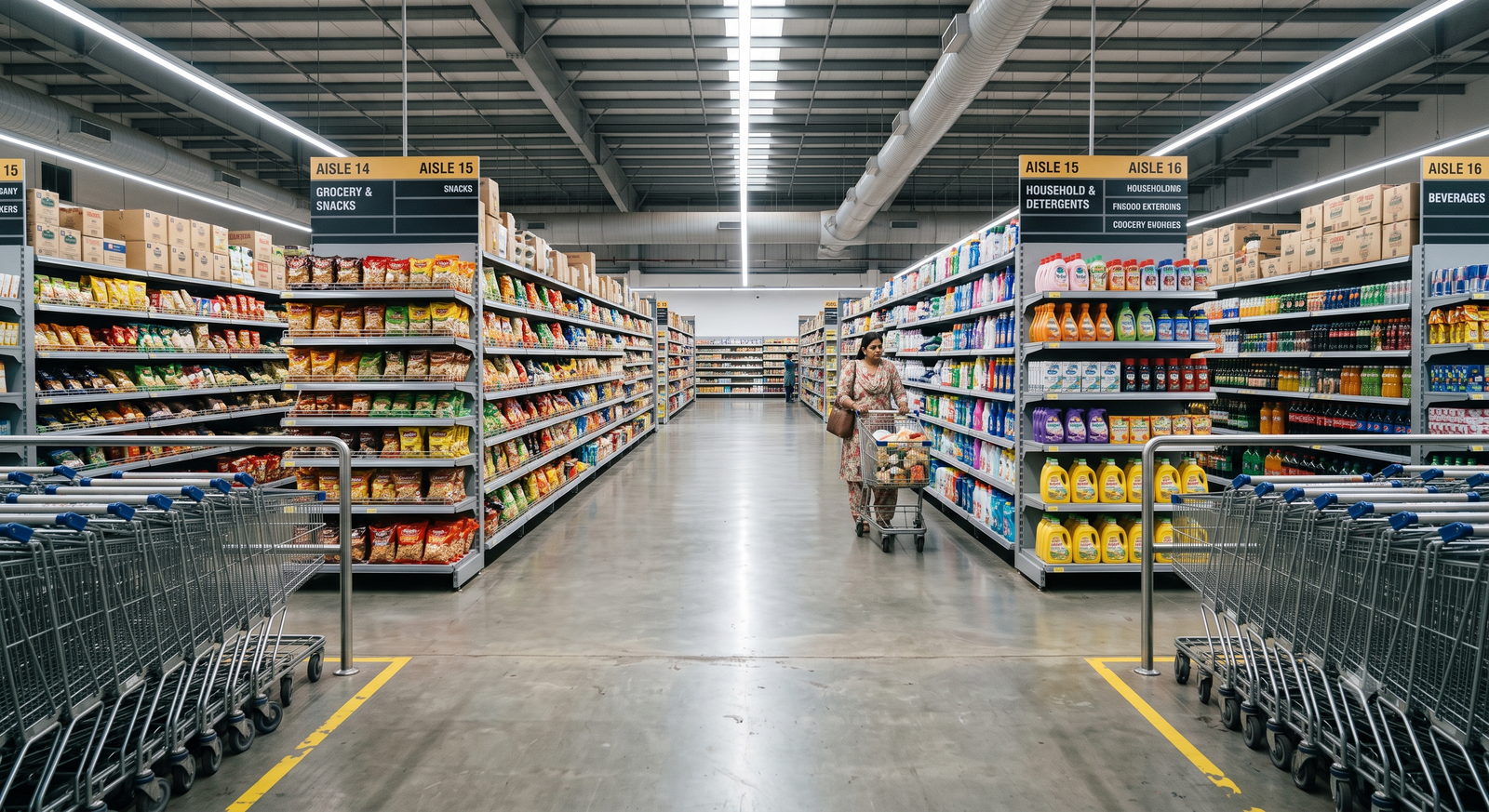
There used to be a ritual to it. Thursday night or Friday morning, the whole family piles into the car, someone grabs a trolley the size of a small boat, and you spend an hour and a half doing the big shop for the week. Rice, cooking oil, the kids’ snacks, whatever’s on sale, all of it in one long, slightly exhausting trip.
That ritual is quietly dying. Not with any big announcement, just a slow fade, the same way people stopped setting alarms to catch a TV show at a specific time. Somewhere along the way, the big weekly shop became the backup plan instead of the main event.
What replaced it is smaller, more frequent, and lives entirely on a phone. Groceries and everyday essentials are now the single biggest category being ordered through quick commerce apps across the region, ahead of restaurant food, ahead of pharmacy runs, ahead of anything else on these platforms. The stuff that used to justify a whole Friday outing now shows up in a bag at your door within half an hour, sometimes less.
Saudi Arabia is the clearest example of how fast this shifted. What started as a small dark-store pilot in Riyadh a few years back, adding a grocery layer onto an existing delivery app, scaled to cover almost the entire Kingdom within a couple of years. Riyadh, Jeddah, Dammam, the dense urban population in these cities gave dark stores exactly the order volume they needed to make the economics work. And once it worked in one city, it didn’t take long to spread.
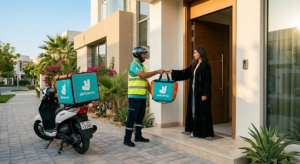
Dubai and Abu Dhabi have their own version of the same story. New players keep entering with the same pitch: groceries delivered faster than you could realistically drive to the shop yourself. And it’s working, because the category that used to require the most planning, the most physical effort, the most patience in a checkout line, is now the one people are least willing to wait for.
Here’s the part that’s actually interesting though, it’s not really about laziness. It’s about what happens once you get used to fast. Once you’ve had milk and eggs show up in fifteen minutes a few times, going back to a planned weekly trip starts to feel like a chore you’re doing wrong. The convenience doesn’t just solve a problem, it quietly resets what normal even means. People aren’t comparing grocery delivery to the hypermarket anymore, they’re comparing it to every other fast, frictionless thing they’ve gotten used to on their phones.
There’s a climate logic to it too, one that’s easy to miss if you’re not living it. A forty-minute round trip to the hypermarket in July heat is a genuinely different experience than the same trip in December. The apps didn’t create the shift on their own, they showed up right as the region’s climate, urban density, and smartphone habits all lined up to make waiting feel unnecessary.
The bigger shop hasn’t disappeared completely, plenty of households still do a monthly stock-up for the bulk stuff, rice sacks, cleaning supplies, the things that don’t need same-day urgency. But the in-between, the day-to-day, the “we’re out of milk” moment, that’s been fully handed over to the apps. And once a habit like that sets in across an entire region, it rarely goes back!