Discover how whales and dolphins use sound at a free Yas Island science talk.
- Artificial intelligence may help researchers study underwater animal communication more closely.
- Dr. Olivier Adam leads the cetacean communication talk on October 29.
- The free event begins at 6:30pm at the research centre auditorium.
- Humpback whale songs and dolphin sounds feature in the discussion.
A whale’s call can travel through water over remarkable distances, carrying information through a world where ordinary conversation is impossible. Yet scientists are still working to understand what these sounds mean. Whale communication takes centre stage at a free science talk on Yas Island this week, where Abu Dhabi’s marine research community will explore how dolphins, whales and porpoises use sound to interact. There’s much more beneath the surface.
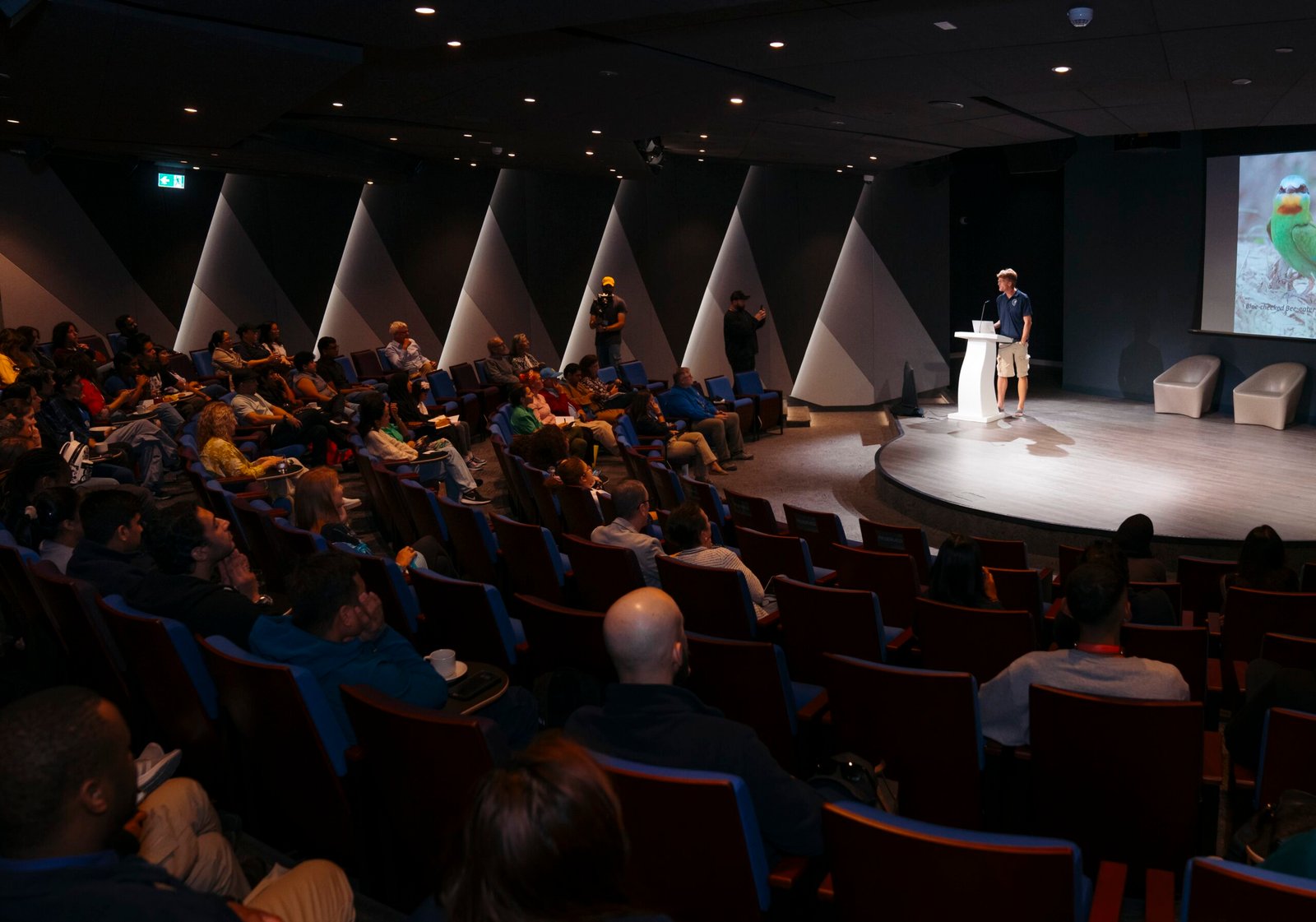
For anyone who has heard dolphins clicking or watched a humpback whale song featured in a wildlife documentary, the sounds can seem almost otherworldly. On 29 October at 6:30pm, the Yas SeaWorld Research & Rescue Center will host The Languages of the Cetaceans, in partnership with Sorbonne University Abu Dhabi. The session invites curious minds to look beyond the sounds and explore the science behind them.
A dolphin doesn’t need a human-style voice to communicate. Cetaceans, the group that includes whales, dolphins and porpoises, produce sound through specialised anatomical structures rather than vocal cords. During the talk, Dr. Olivier Adam, Deputy Director of the Ocean Institute at Sorbonne University Abu Dhabi, will discuss these mechanisms, including the differences between baleen and toothed whales. The biology is fascinating.
Humpback whale songs will also feature in the discussion, offering a glimpse into the complex acoustic patterns researchers study beneath the waves. Scientists can record and analyse these calls, looking for patterns in pitch, timing and repetition. Understanding what those patterns mean is a harder task.
Artificial intelligence is adding another tool to marine acoustics research. Machine learning systems can help researchers sort large collections of underwater recordings and identify patterns in animal sounds, making it easier to study calls that might otherwise take years to examine manually. But recognising a sound is not the same as translating it.
A public science event can make specialist research feel closer to home, especially for families, students and anyone curious about the Arabian region’s marine life. The Yas SeaWorld Research & Rescue Center has welcomed nearly 4,000 guests to its Science Talk series since it began in 2023, covering science, environmental conservation and natural history. The conversations continue.
The 29 October session takes place in the centre’s auditorium and is free to attend, although advance registration is required because spaces are limited. Those unable to make it to Yas Island can catch up later, as recorded Science Talks are made available on the SeaWorld Yas Island, Abu Dhabi YouTube channel.
For an evening that connects ocean curiosity with real research, The Languages of the Cetaceans offers a chance to hear how scientists investigate the lives unfolding beneath the water. Register in advance, or save the recorded talk for later. The ocean still has plenty to tell us!
To learn more about the Science Talk series at YasSeaWorldResearch & RescueCenter, please visit:
https://www.seaworldabudhabi.com/en/research-and-rescue/science-talk-series
To book a guided tour of the Yas SeaWorld Research & Rescue Center, please visit:
https://www.seaworldabudhabi.com/en/research-and-rescue/guided-tour.