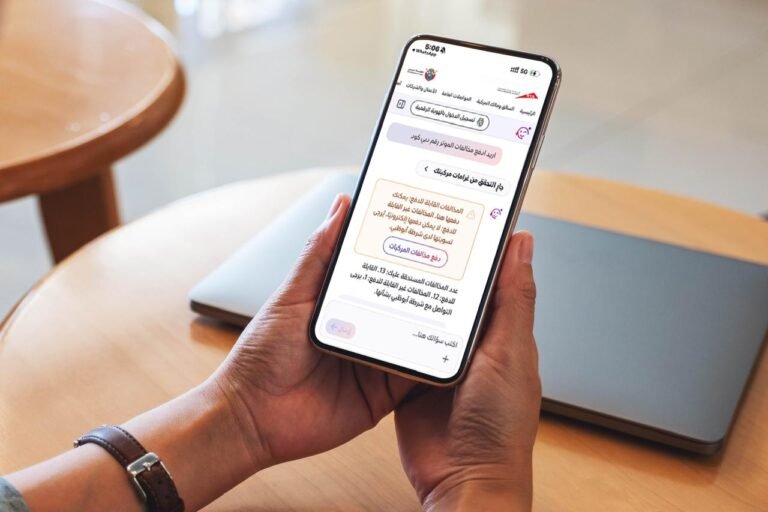

Returning to full office life after summer is one of the highest-risk periods for back pain and posture damage for UAE professionals.
- Back pain is the leading cause of work-related disability among UAE professionals in 2026.
- Returning to desk work after summer breaks significantly increases spinal compression risk.
- Forward head posture from screens adds up to 27 kilograms of pressure on the cervical spine.
- Five minutes of daily spinal decompression reduces chronic back pain markers significantly.
September arrived and so did the desk. After weeks of summer travel, irregular schedules, and the kind of physical freedom that comes from not being anchored to a chair for eight hours a day, millions of UAE professionals this week returned to exactly the sitting position that physiotherapists, spinal specialists, and occupational health experts consistently identify as the single most damaging postural habit of modern working life. Back health is September’s most urgent and most ignored wellness priority, and the transition from summer movement to full-time desk work is one of the highest-risk periods for spinal compression, posture deterioration, and the kind of chronic low-grade back pain that most UAE professionals have accepted as simply part of working life. It does not have to be. And this week, before the habits of the new term fully calcify, is the most important window to address it.
Why September Is the Most Important Month for Back Health in the UAE
The physiology of what happens to the spine during prolonged sitting is well established and genuinely alarming when most people encounter it for the first time. Sitting compresses the lumbar discs at a rate approximately forty percent higher than standing, with the compression increasing further when the sitting position involves a forward lean toward a screen, which describes the default posture of most desk workers within two hours of beginning work. Forward head posture, the position produced by looking at a screen that sits even slightly below eye level, adds between fifteen and twenty-seven kilograms of additional pressure to the cervical spine for every inch the head moves forward from its neutral alignment over the shoulders. Most UAE office workers spend between six and ten hours daily in exactly this position, and the cumulative disc compression, muscle shortening, and neural tension that results is the single most common source of the chronic neck, upper back, and lower back pain that has become endemic among Dubai’s professional population.
The return from summer makes this particularly acute for one specific and underappreciated reason. Summer movement patterns, even imperfect ones, typically involve significantly more varied positions, more walking, more swimming, more time not sitting, than the term-time desk schedule demands. The muscles that support the spine, particularly the deep core stabilisers, the hip flexors, and the erector spinae, have had an unplanned deconditioning break and are returning to maximum sitting load without the supporting strength they had in June. This is the physiological equivalent of returning to heavy lifting after a break without a warmup period, and the spinal consequences of getting this wrong accumulate silently until they become painful enough to require intervention. The window to address this is now, in the first two weeks of September, before the patterns of the new term lock in.
The practical interventions are specific and immediately accessible. The single most important ergonomic adjustment for any UAE desk worker this week is screen height. The top of your monitor should sit at or just below eye level, with the screen approximately an arm’s length away. This single change eliminates the forward head position that generates the most significant cervical spine loading, and most UAE office workers can make it today without any equipment purchase. The second adjustment is chair height: feet flat on the floor, knees at ninety degrees, hips level with or slightly above the knees, lumbar support making contact with the natural curve of the lower back. Take two minutes this Monday morning to reset both of these before beginning work and your spine will be in a categorically different position for the entire day.
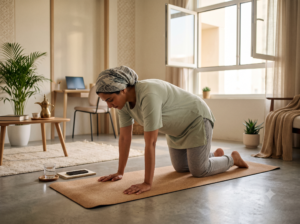
Movement is the other half of the equation and it is non-negotiable. The spine is designed for movement and deteriorates under the mechanical stress of sustained static loading. Setting a timer for every forty-five minutes and standing or walking for two minutes is the single highest-impact intervention available to any desk worker, reducing lumbar disc compression, reactivating the hip flexors that shorten with prolonged sitting, and improving circulation to the spinal tissues that depend on movement rather than blood vessels for their nutrition. Five minutes of targeted spinal decompression in the morning, beginning with a simple child’s pose followed by a gentle cat-cow sequence on the floor, measurably reduces the compressive load that accumulates in the lumbar discs during sleep and dramatically reduces the morning stiffness that most UAE adults have normalised as an inevitable feature of getting older. It is not inevitable. It is a mechanical consequence of inadequate spinal decompression, and it responds quickly to consistent attention.
September is back health month for a reason. The return to desk life after summer is the moment when the habits that will determine your spinal health for the entire term are formed. Get the screen height right this morning. Move every forty-five minutes. Add five minutes of spinal decompression before you open your laptop. Your back is not complaining yet. That is the best possible time to start paying attention to it!