
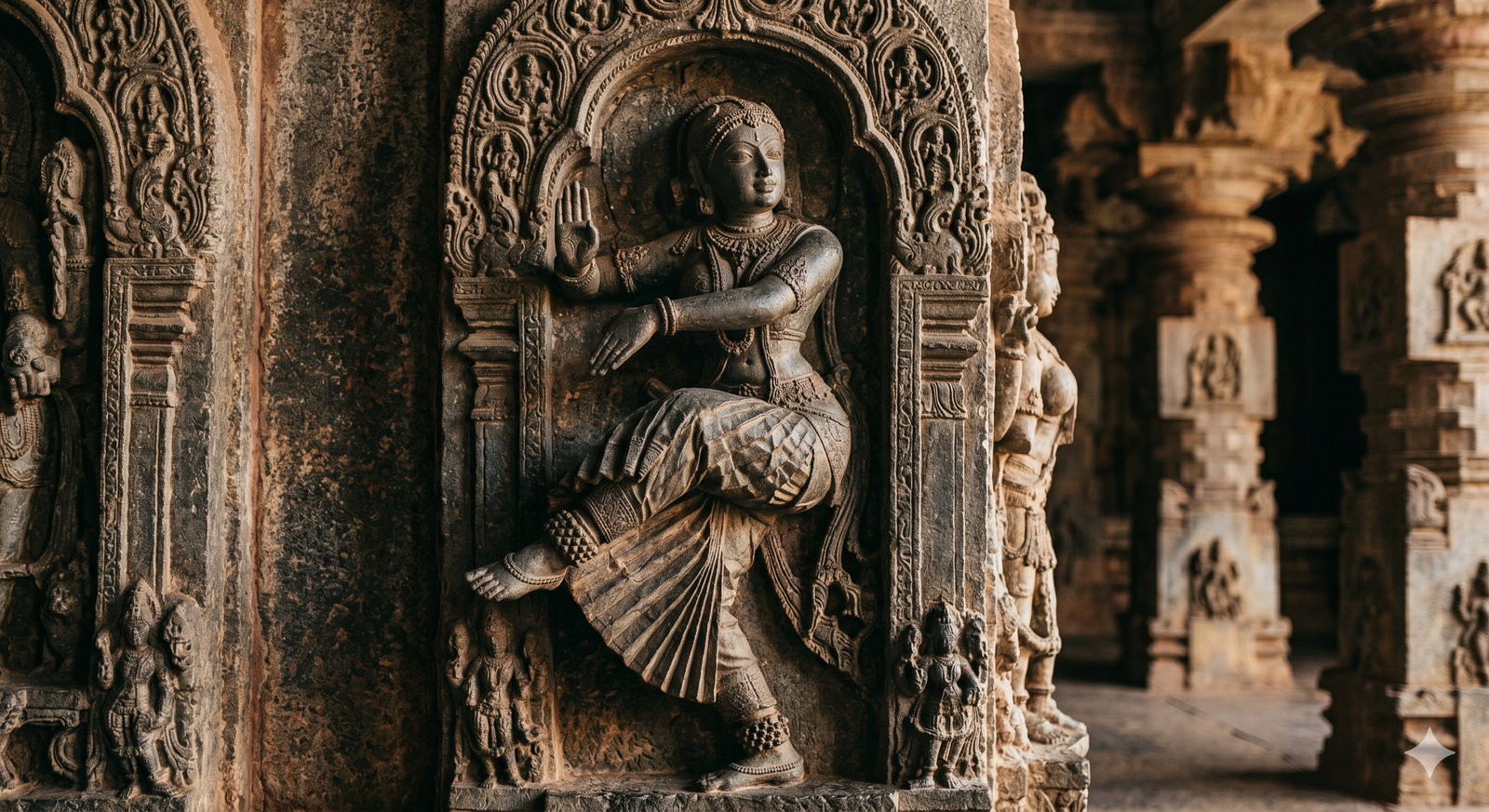
The women who kept India’s greatest classical dance forms alive for centuries were called servants of God. Then colonial rule called them something else entirely.
- The Devadasi tradition dates back to the 6th century CE in South Indian temples
- Devadasis were the original custodians of Bharatanatyam and Odissi dance forms
- Colonial British rule misrepresented and effectively dismantled the entire tradition
- Without Devadasi knowledge, India’s classical dance heritage would not have survived
The Devadasi tradition India has spent decades navigating an uncomfortable relationship with produced something extraordinary before anyone decided it was a problem. Bharatanatyam, one of the most technically demanding and spiritually rich classical dance forms in the world, would not exist in its current form without the women who preserved it inside temple corridors for over a thousand years. Odissi would not exist. The intricate vocabulary of mudras, abhinaya and Natya Shastra principles that define Indian classical performance today were kept alive, transmitted and refined by women whose lives were dedicated entirely to the sacred arts. Their story is layered, contested and considerably more complex than the version most people have heard.
Dating back to around the 6th century CE, the Devadasi tradition was a deeply spiritual practice where women were dedicated to the service of deities in Hindu temples. These women were considered married to the deity and took on significant roles in temple rituals, including dance and music performances, which were integral to daily worship and grand festivals. The word itself is straightforward enough. Deva means god. Dasi means female servant in devotion. But the reality of what that service meant, at its peak during the Chola and Vijayanagara periods, was far more elevated than the word servant implies.
The Devadasis were not just performers. They were torchbearers of classical dance forms like Bharatanatyam and Odissi, keeping alive intricate storytelling traditions through abhinaya, intricate footwork and soulful music. Many of the Natyashastra principles were practiced and perfected within this tradition, and their refined artistry laid the foundation for India’s rich performing arts legacy, shaping classical dance as we know it today.
To understand what that means in practice, consider what the Natya Shastra represents. Attributed to the sage Bharata Muni and composed somewhere between 500 BCE and 500 CE, it is one of the most comprehensive treatises on performing arts ever written, covering everything from the mechanics of movement and the theory of expression to stagecraft, costume and the emotional grammar of storytelling through the body. The Devadasis were not simply dancing. They were the living, breathing embodiment of a philosophical system so intricate that scholars are still unpacking it today. Their dance was seen as the ultimate form of bhakti, which enabled the soul to transcend the physical and material world and unite with the almighty. The temple was the stage. The performance was the prayer.
Because they were literally married to the deity, Devadasis were to be treated as if they were the Goddess Lakshmi herself, which gave them a social standing that was genuinely unusual for women in the medieval period. They could own property. They could not be widowed. They were educated, trained from childhood in music, poetry, language and dance, and they held positions of genuine cultural authority within the communities they belonged to.
With the advent of British rule, the Devadasi tradition underwent significant changes. Colonial authorities misunderstood and misrepresented the tradition, associating it with immorality. The abolition of temple patronage and changing social attitudes reduced support for Devadasis. The British did not simply observe and record a tradition they did not understand. They legislated against it. The British colonial government enforced laws to suppress Hindu temple dances, and the entire institution of classical Indian dance, which had remained exclusive to Hindu temples through the 19th century, was effectively dismantled through legal and social pressure.
The irony is extraordinary. A tradition that had preserved one of the world’s most sophisticated performing arts systems for over a thousand years was reframed as evidence of cultural backwardness by an administration whose own relationship with the performing arts was considerably less philosophically complex. The misrepresentation was not incidental. It served a purpose.
What survived did so partly through defiance and partly through the work of remarkable individuals on both sides of the cultural divide. Some from the West, such as the American dancer Esther Sherman, moved to India in 1930, learned Indian classical dances, changed her name to Ragini Devi, and joined the movement to revive Bharatanatyam and other ancient dance arts. Indian scholars, freedom fighters and artists of the independence movement simultaneously began reclaiming classical dance as a marker of national identity and cultural pride.
The result is the Bharatanatyam you see performed on stages in Dubai, Mumbai, Chennai and London today. Technically rigorous, spiritually grounded, and carrying inside every gesture a thousand years of knowledge that very nearly did not make it.
The Devadasis kept it alive. That is what they were for. And that is what is most worth remembering about them!