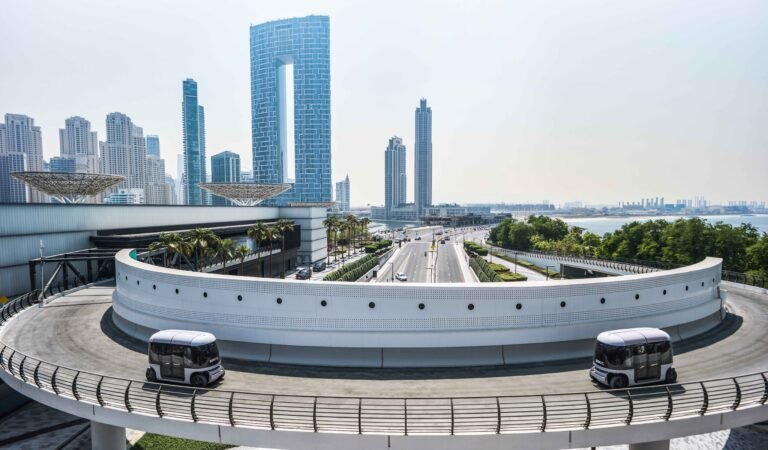
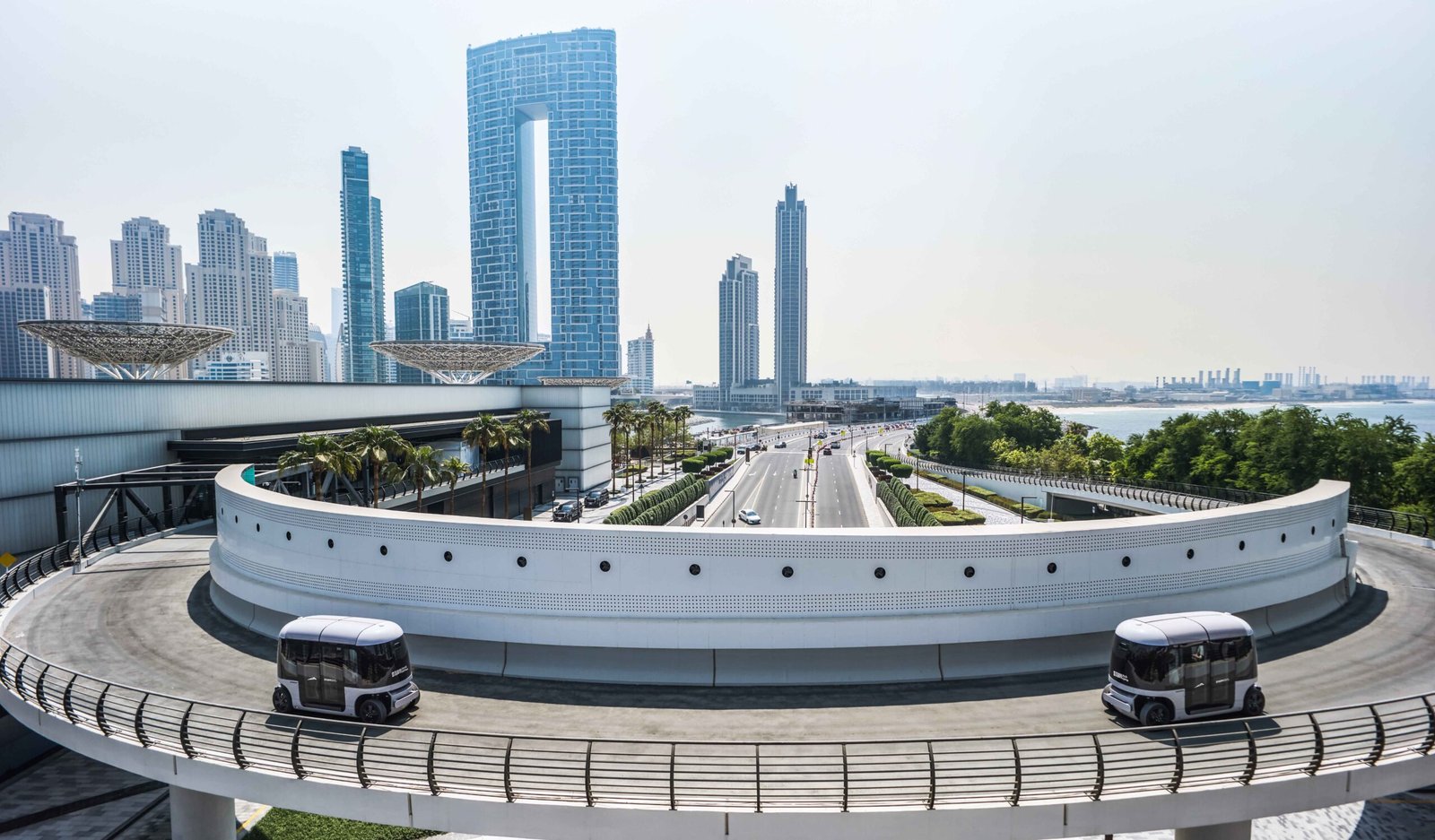
Driverless electric pods are being tested at Bluewaters, with future routes planned around key Dubai destinations.
- Dubai Glydways begins a four-week trial at Bluewaters Island.
- Each autonomous electric vehicle can carry up to six passengers.
- Future routes could connect Metro stations with major Dubai destinations.
- The system targets more flexible first and last-mile journeys.
A trip across Dubai can involve more than one ride. Reaching the Metro, crossing a busy road or covering the final stretch to a restaurant can add extra steps to an otherwise simple outing. Dubai Glydways is being tested at Bluewaters Island to tackle that missing link, using small driverless electric vehicles that travel along dedicated guideways. The trial puts a new kind of urban transport into the city’s real-world setting.
For visitors spending an evening around Bluewaters, the idea is straightforward: travel directly between designated points without sharing the road with general traffic. Dubai’s Roads and Transport Authority has started a four-week trial, following a five-minute demonstration ride by RTA Director General Mattar Al Tayer. The testing phase has begun.
Anyone who has hurried from a Metro station to a meeting or attraction knows that the final stretch can shape the whole journey. The proposed Glydways network is intended to connect public transport stations with residential, commercial and tourist destinations. Plans include studying a 2.8-kilometre route between National Paints Metro Station and Bluewaters, alongside potential routes serving Jumeirah Village Circle, Business Bay, Dubai Festival City and Mohammed Bin Rashid City. These are proposed connections, not confirmed operating routes.
Unlike a conventional road vehicle, each Glydways pod runs on a dedicated, narrow guideway using autonomous driving and artificial intelligence systems. It can carry four to six passengers, reach speeds of up to 50 km/h and travel up to 250 kilometres on a single battery charge. Small vehicles, a bigger network.
The service model is also different from a fixed-route bus. Glydways is planned around on-demand, point-to-point trips, with options to personalise cabin climate and entertainment. For a family heading to an attraction or colleagues travelling together between nearby destinations, that flexibility could be useful. The trial will test how the vehicles move, how the systems communicate and how passengers experience the service.
Capacity is another part of the proposition. RTA says the system could carry more than 20,000 passengers per hour in both directions, with vehicles virtually linked at very short intervals. That figure describes the system’s stated capacity, not passenger numbers currently being carried at Bluewaters.
For now, the Bluewaters trial is about collecting evidence on safety, reliability, journey times and day-to-day operation before wider expansion is considered. If the results support further development, Glydways could add another connection between Dubai Metro and the destinations people travel to every day!