
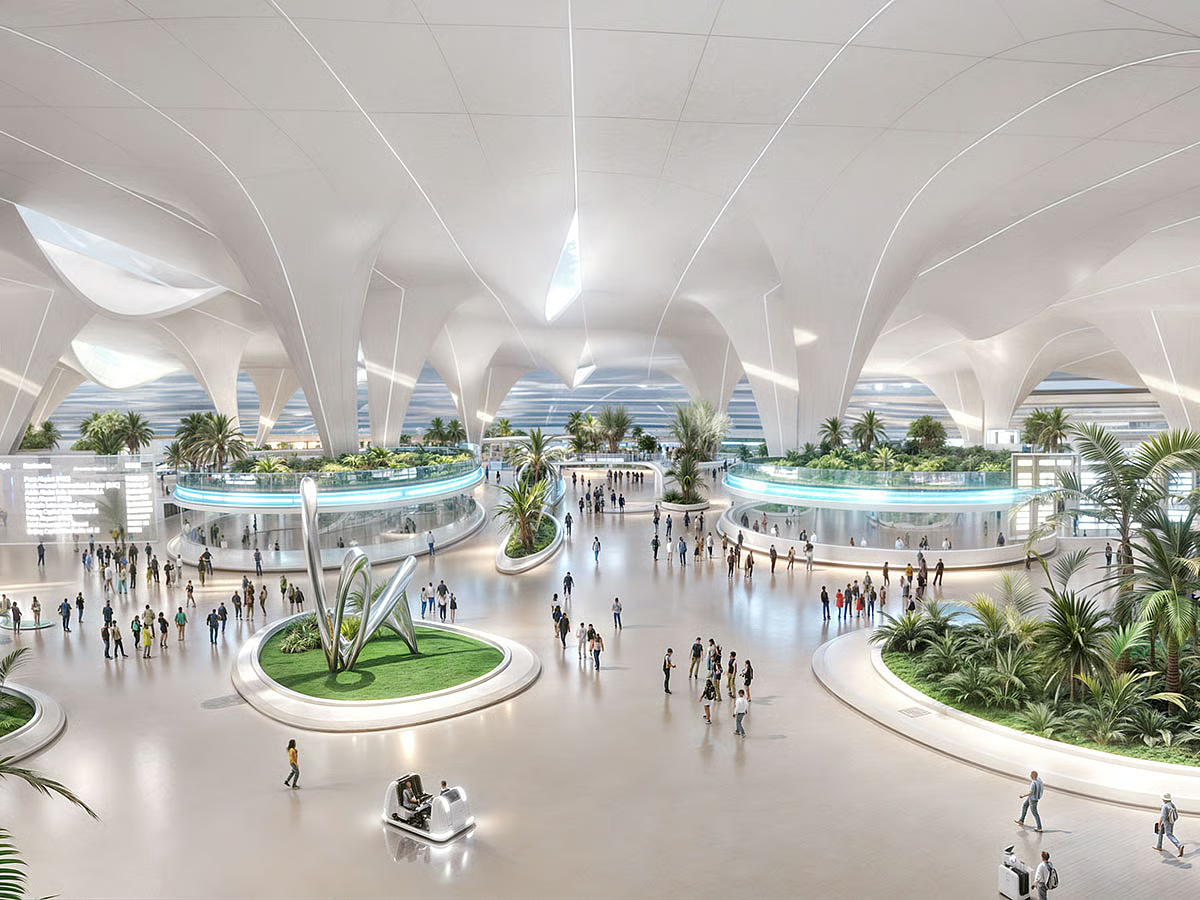
The massive project shaping Dubai’s future as a global travel hub
- Dubai is investing heavily in aviation infrastructure for future demand.
- Passenger growth continues pushing existing airport capacity closer to limits.
- The project could reshape tourism, logistics, and international connectivity globally.
- Al Maktoum Airport sits at the center of Dubai’s long term vision.
Morning departures at Dubai International Airport often feel like a glimpse into the future of travel. Terminals stay busy, airlines continue adding destinations, and passenger numbers keep climbing. Against that backdrop, Al Maktoum Airport is emerging as one of the most ambitious aviation projects anywhere in the world. The development is not simply about building a larger airport. It is about preparing Dubai for decades of future growth.
Recent forecasts indicate DXB could handle close to 100 million passengers in 2026, reinforcing its position as one of the world’s busiest international travel hubs. At the same time, Dubai is investing billions into expanding Al Maktoum International Airport in Dubai South, a project designed to eventually accommodate up to 260 million passengers annually. Big numbers. Bigger ambitions.
Dubai Aviation Expansion Signals a Long Term Strategy
The growing demand for international travel is not unique to the UAE. Airports across Europe, Asia, and North America are facing capacity challenges as passenger traffic continues to recover and expand. Dubai’s response has been notably different. Rather than waiting for congestion to become a larger problem, the emirate is building infrastructure years ahead of projected demand.
Plans for Al Maktoum Airport include five runways, hundreds of aircraft gates, expanded cargo facilities, and the capacity to support future aviation growth on a scale few cities can match. The project is expected to become the largest airport hub by capacity once fully developed. That matters.
Why the Future of Global Travel Could Pass Through Dubai
The story extends beyond aviation. Tourism growth, business travel, logistics, and trade all depend on strong connectivity. Dubai welcomed millions of international visitors in recent years, while airlines such as Emirates and flydubai continue strengthening the city’s role as a global crossroads linking East and West.
For travelers, the benefits may eventually be felt through smoother connections, increased flight options, and expanded routes. For businesses, improved aviation infrastructure supports investment, commerce, and international partnerships. The airport becomes part of a much larger ecosystem.
That is what makes Al Maktoum Airport significant. It is not simply a transportation project. It is a statement about where Dubai sees itself in the future. As global demand for air travel continues to rise, the emirate is betting that the next era of aviation will require infrastructure built for tomorrow rather than today.