A Sufi saint, a Yemeni monopoly and the monsoon shaped the coffee in your cup.
- Legend says Baba Budan smuggled seven beans from Yemen to India
- Karnataka grows about 71 percent of all the coffee India produces
- Monsooned Malabar began by accident on sailing ships bound for Europe
- Yemen once exported only roasted beans to protect its coffee monopoly
Somewhere in the Western Ghats, a hillside in Karnataka is named after a man who may have committed the most polite act of smuggling in history. Seven beans. One long trip home from Mecca. Indian coffee history starts there, with a Sufi saint, a Yemeni monopoly and a gamble that now fills cups from Chikmagalur to Dubai.
Indian Coffee History Begins With a Legend
For centuries, the world’s coffee passed through one door. The Yemeni port of Mocha shipped beans across the seas, and its merchants guarded the trade closely. Beans left Arabia roasted or parboiled so that no buyer could plant them. Control was the point.
Then, as the story goes, a Sufi saint named Baba Budan went on pilgrimage to Mecca. On the way home he stopped at Mocha and left with seven raw beans. Seven is a sacred number in Islam, and accounts differ on where he hid them: in his beard, in his garment, strapped to his belly. He carried them to the hills near Chikmagalur in Karnataka and planted them around his hermitage in the Chandragiri range. Those hills carry his name today, Baba Budan Giri. The traditional date is 1670, though some tellings place it in the 16th century.
It is a legend, and historians add a caution. Coffee may also have reached India’s Malabar Coast earlier through Arab traders. But the saint’s story endures because it explains something true. The plant came to India from Arabia, carried by faith and stubbornness.
From a Hermitage Garden to Plantation Country
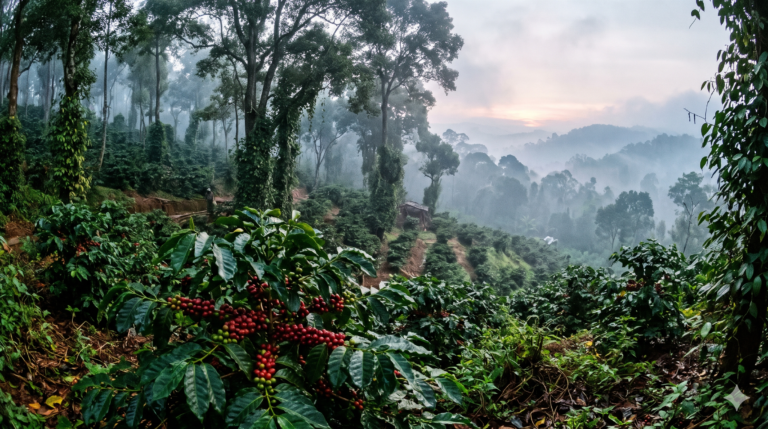
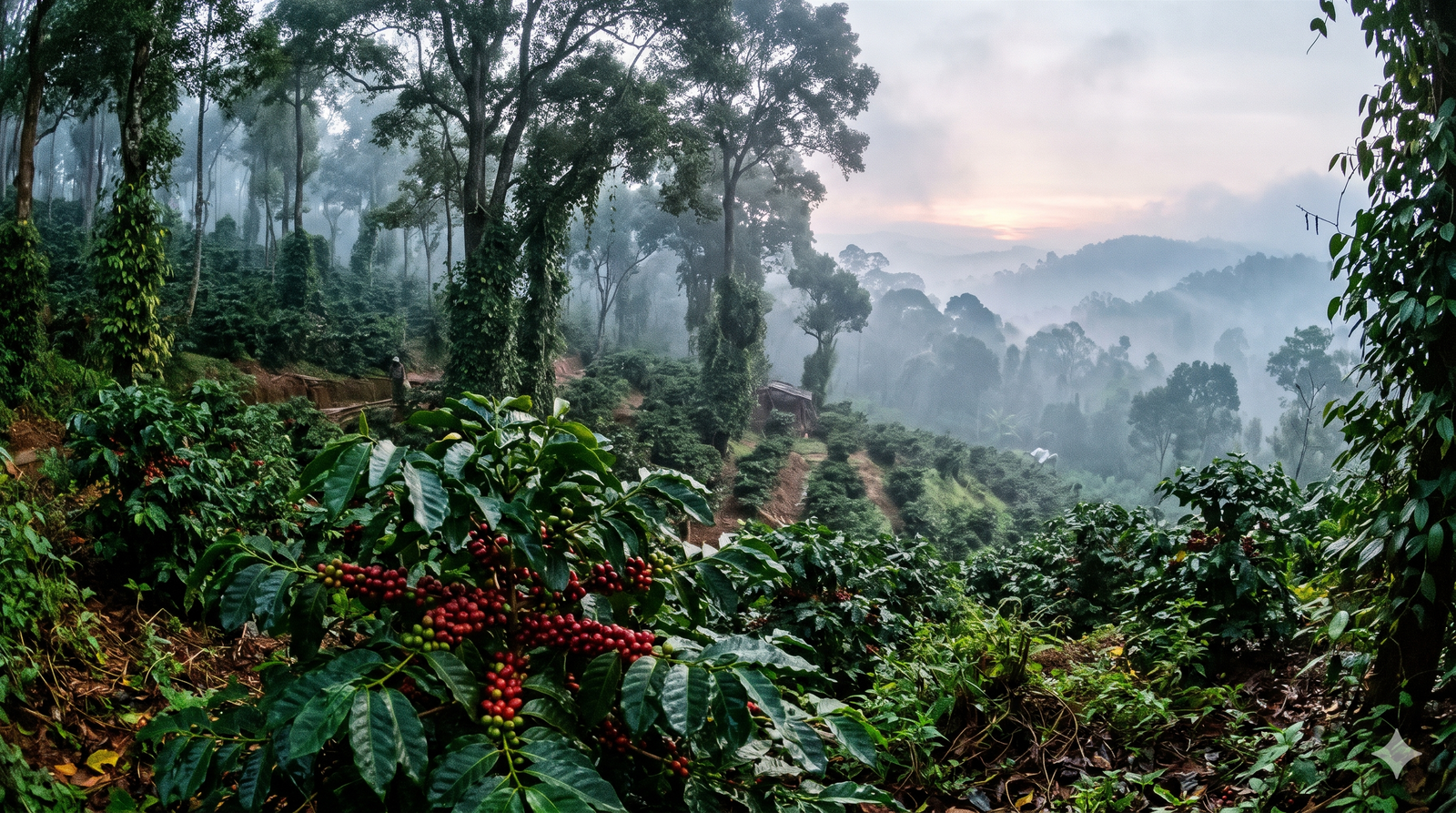
Walk through the estates around Chikmagalur on a cool morning and the air smells of wet earth, pepper vines and ripening cherries. Coffee here grows in the shade, among cardamom, pepper and orange trees. The first commercial plantations were established around these hills in 1840. Today Karnataka produces about 71 percent of India’s coffee, and the Kodagu district alone accounts for roughly a third. Kerala adds about 21 percent and Tamil Nadu about 5 percent.
India grows far more Robusta than Arabica, roughly two thirds of the crop. Several of its coffees now hold geographical indication status, including Chikmagalur Arabica, Bababudangiris Arabica, Araku Valley Arabica and Monsooned Malabar Robusta. A hobby garden became an industry.
The Monsooned Malabar Coffee Accident
Some of India’s best coffee exists because of a delay. In the age of sail, beans shipped from the Malabar Coast to Europe spent months in damp holds, exposed to monsoon winds and rain. They arrived swollen, golden and strangely mellow, with low acidity. Drinkers liked what they tasted. As voyages got faster, producers began recreating the effect on land, under controlled conditions that mimic those long sea crossings. A happy accident became a protected tradition.
It also ties this story to the monsoon, the force that shaped so much of India’s history.
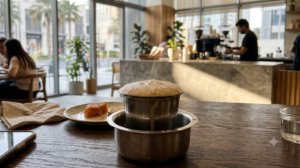
Order a filter coffee at a café in Karama or Bur Dubai and it arrives in a steel tumbler, frothed by being poured between two vessels. Behind it may sit beans from Kodagu or Chikmagalur. Coffee left Arabia in the 17th century inside a saint’s clothing and returned as an Indian specialty, poured in Dubai cafés every morning. The Gulf’s own tradition, from the Arabic qahwa to the cardamom-scented cups of Emirati hospitality, is the other half of the same story. Same plant. Two cultures.
Next time you sip a flat white or a tumbler of filter kaapi, remember seven beans and a saint!