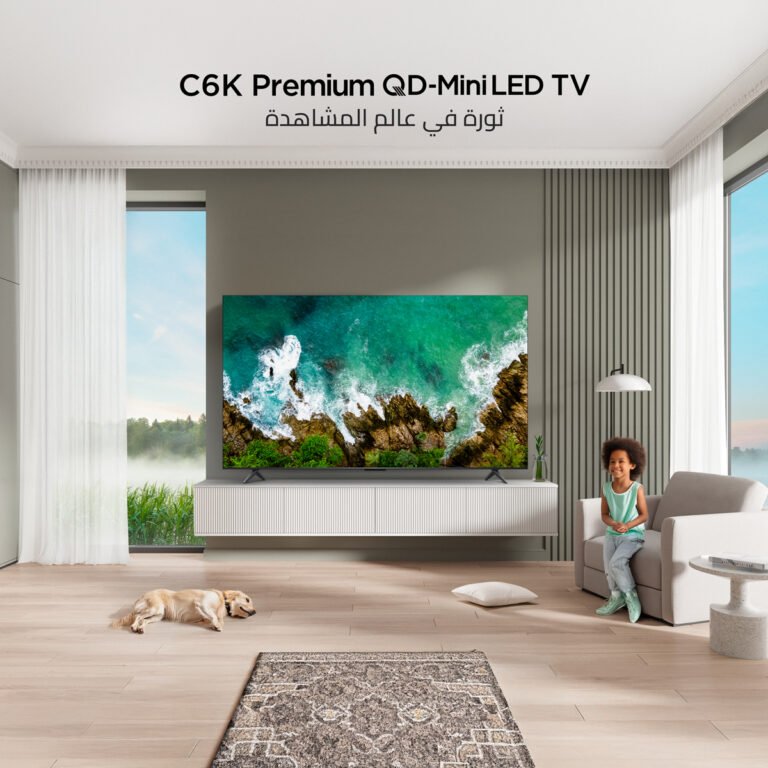
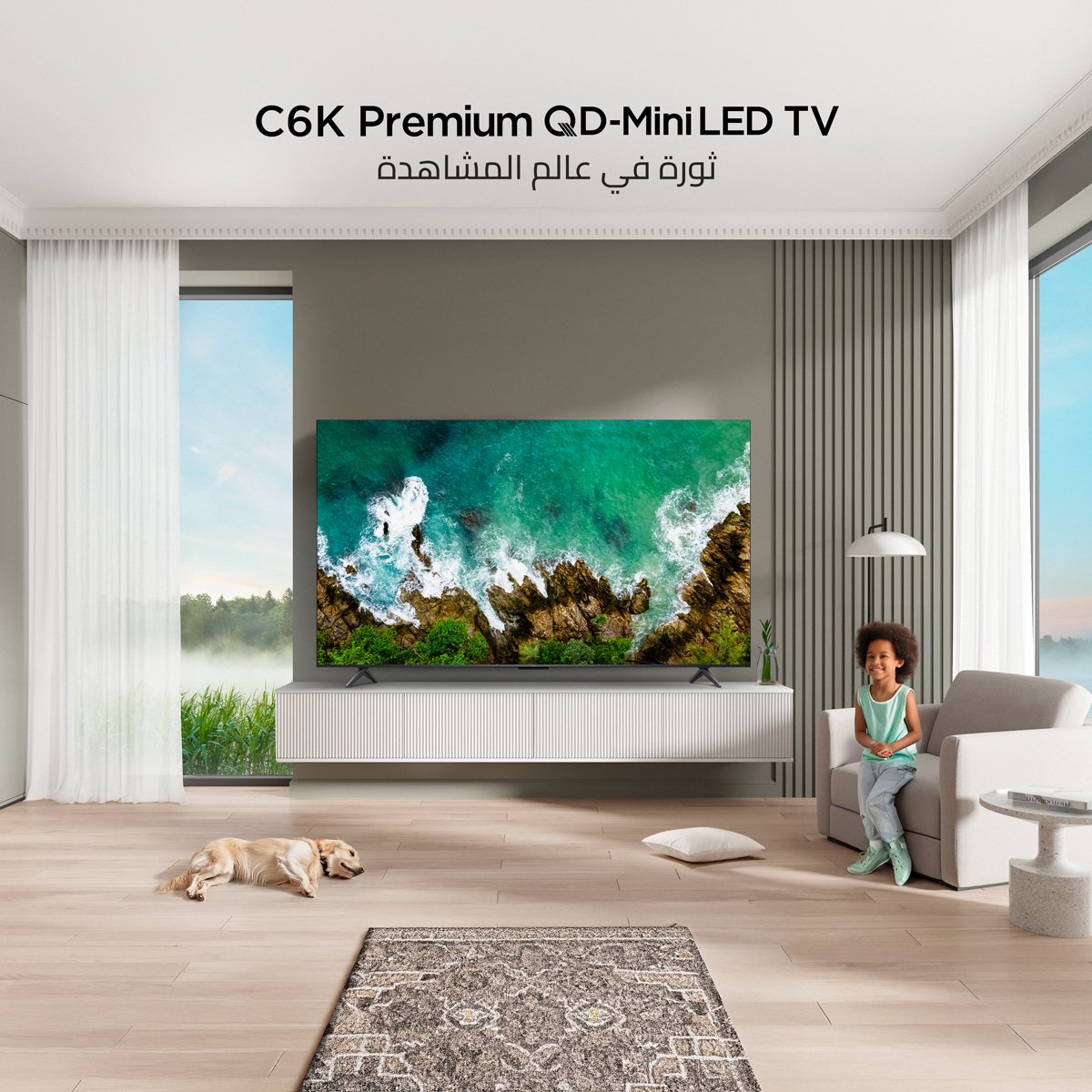
The label matters less than what sits behind the screen and controls its light.
- Mini LED can deliver deeper blacks and brighter highlights.
- Dimming zones determine how precisely light and shadow separate.
- Hardware control matters more than clever software shortcuts.
- Full-array backlighting helps genuine Mini LED performance stand out.
Walk into an electronics store in Dubai and you’ll quickly spot the familiar TV shopping trap: bigger numbers, brighter screens and a growing list of technical labels. Mini LED TV sits high on that list, promising richer contrast and sharper detail, but the name itself doesn’t tell you how good the picture will actually look.
Mini LED uses much smaller LED chips than conventional LCD backlights, allowing manufacturers to place far more light sources behind a screen. More LEDs can mean more control, particularly when a bright moon sits against a black sky or subtitles appear over a dark movie scene. That sounds straightforward. It isn’t.
Two TVs can carry the same Mini LED label while producing noticeably different results. The difference comes down to what happens behind the panel, particularly how the backlight is controlled and how precisely it can separate bright areas from dark ones.
Think about a late-night movie scene in a Dubai living room, with a character standing beside a bright window. A good display needs to keep the window luminous without turning the surrounding darkness into a grey haze. That’s where local dimming zones become important.
Hardware local dimming physically adjusts groups of LEDs behind different parts of the screen. Software-based or virtual approaches can process the image to simulate some of that effect, but they don’t provide the same physical control over the backlight.

Zone count matters too. A TV with several hundred independently controlled zones can already improve contrast over a conventional LCD design, while models with several thousand zones can make the separation between light and shadow more precise.
That distinction is particularly relevant for UAE households buying large screens for movie nights, football matches or gaming. A huge panel may look impressive on a showroom wall, but picture quality depends on what the screen can actually do with all that space.
Then comes the architecture. Full Array Local Dimming, or FALD, distributes LEDs across the entire rear of the panel and controls them in separate zones. Edge-lit designs place LEDs around the screen’s perimeter, while direct-lit designs generally don’t offer the same zone-by-zone precision.
For shoppers comparing TCL Mini LED models, this is where the company’s approach becomes relevant. TCL’s Mini LED range uses full-array local dimming, while its newer 2026 SQD-Mini LED lineup pushes that architecture further, with flagship models offering more than 20,000 local dimming zones and up to 10,000 nits of peak brightness.
For someone browsing TVs before a major upgrade, the takeaway is surprisingly simple. Don’t stop at the words Mini LED on the box. Ask about hardware local dimming, the number of independently controlled zones and whether the screen uses a full-array architecture.
That quick checklist can tell you far more about the picture waiting at home than the label alone!
Visit the Website for more details and updates.