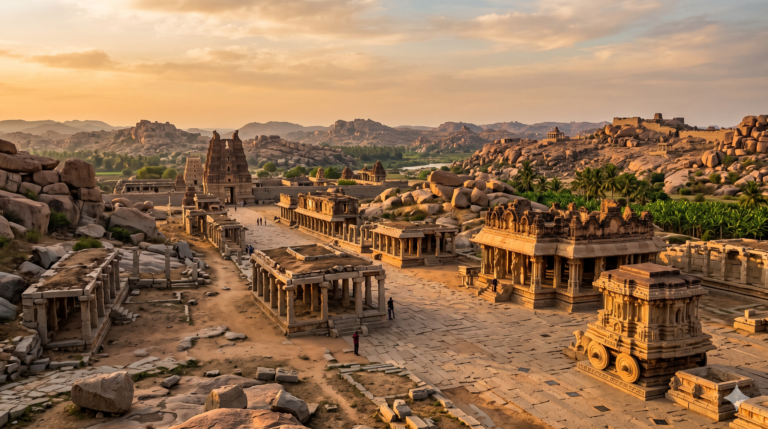
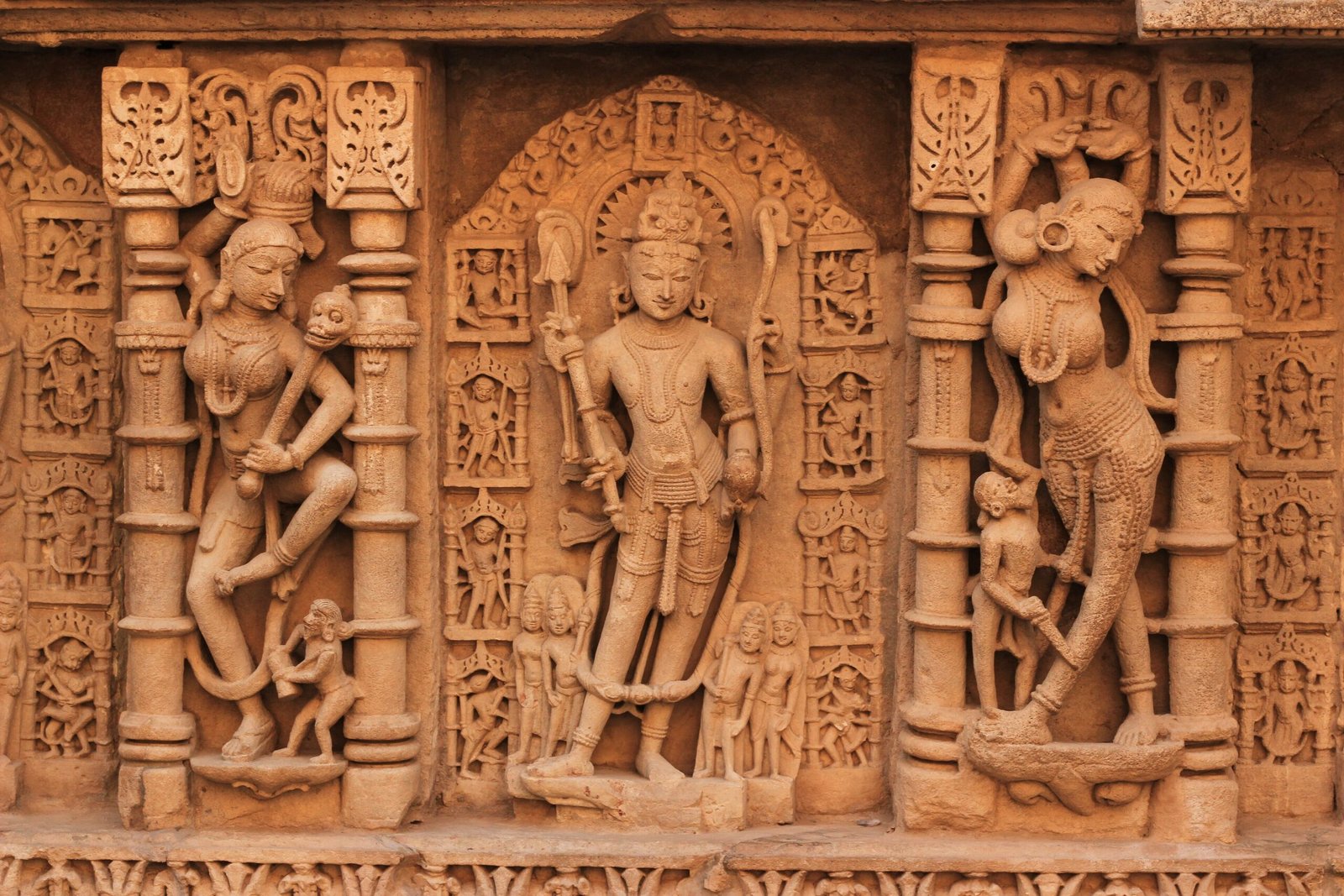
A queen built an inverted temple beneath the earth in 1063 CE and the world forgot about it for seven centuries.
- Rani ki Vav was built in 1063 CE and buried underground for over seven centuries.
- The Queen’s Stepwell houses over 500 principal sculptures and a thousand minor ones.
- It was designed as an inverted temple built entirely below the surface of the earth.
- Since 2018 Rani ki Vav appears on the reverse of India’s one hundred rupee note.
There is a wonder sitting 28 metres beneath the surface of a quiet town in Gujarat that most people in India, and almost everyone in the rest of the world, have never heard of. Rani ki Vav, the Queen’s Stepwell, is located on the banks of the Saraswati River in Patan, 125 kilometres north of Ahmedabad, and is considered one of the finest and largest examples of stepwell architecture ever built anywhere on earth. It is a UNESCO World Heritage Site. It appears on the reverse of India’s 100 rupee note. And for seven centuries, it lay completely buried under silt, hidden from the world, while two stone arches peeked above the sand as the only visible evidence that something extraordinary existed below. The story of Rani ki Vav is the story of a queen’s love, a civilisation’s ingenuity, and one of the greatest architectural rediscoveries in history.
Rani ki Vav was commissioned in 1063 CE by Queen Udayamati of the Solanki dynasty to honour her husband, King Bhimdev I, who had died leaving her to govern from Patan, then called Anahilapataka, the flourishing capital of the Solanki kings. According to 14th century records, the stepwell took approximately 20 years to complete. That single fact is worth sitting with. Twenty years. A queen who had lost her husband chose to spend two decades building not a palace, not a temple above ground, but an inverted temple beneath it, a monument to water, to grief, and to extraordinary craftsmanship that the people of her city would use every day of their lives.
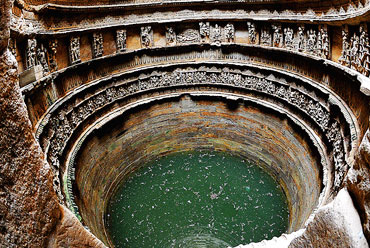
Designed as an inverted temple highlighting the sanctity of water, Rani ki Vav is divided into seven levels of stairs with sculptural panels of high artistic quality. More than 500 principal sculptures and over a thousand minor ones combine religious, mythological and secular imagery, often referencing literary works. The structure measures 65 metres long, 20 metres wide, and 28 metres deep. Its 212 pillars are carved with floral patterns, mythological figures, celestial women, and incarnations of Vishnu. The walls depict Brahma, Shiva, Ganesha, Lakshmi, Saraswati, and hundreds of other divine and earthly figures in configurations of astonishing complexity and beauty. The elaborate carvings include celestial women, Nagakanya and Yogini figures, and the Anant asayana form of Lord Vishnu reclining on the thousand-hooded serpent Shesha, all rendered with a refinement of detail that UNESCO describes as the pinnacle of craftsmanship in stepwell construction. Standing at the top of its eastern entrance and looking down through its seven descending levels is like looking into a cathedral that chose to grow downward rather than up.
Stepwells were India’s answer to an engineering problem that most civilisations never solved as elegantly. They evolved over thousands of years from basic pits in sandy soil into elaborate multi-storey works of art and architecture, providing communities in the arid regions of Gujarat and Rajasthan with reliable access to groundwater while simultaneously serving as social and spiritual spaces where people could gather, rest in the cool underground air, and connect with the sacred. The ornamentation of Rani ki Vav depicts the entire universe inhabited by gods and goddesses, celestial beings, men and women, monks, priests and laity, animals, fish and birds, as well as plants and trees, which means that every descent into the well was also a descent through a complete cosmological vision of the world. It was engineering, art, theology, and community infrastructure all in one structure, built seven levels deep, carved by hand, over twenty years, for a king who was already gone.
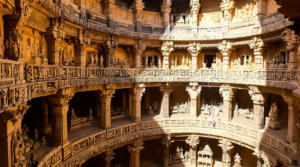
Over time the stepwell became buried under layers of silt and was largely forgotten. Nineteenth century travellers noted only two stone arches above the sand. A full excavation did not begin until the 1940s, and archaeologists from the Archaeological Survey of India spent decades unearthing and restoring the site. By the 1980s all seven levels were exposed, revealing over 800 carved figures and countless relief panels. What the silt had done, paradoxically, was preserve it. It was the silting of the flood caused during a historic geological event which allowed for the exceptional preservation of Rani ki Vav for over seven centuries. The monument that was buried survived. Those that remained above ground mostly did not. In 2014 UNESCO inscribed Rani ki Vav as a World Heritage Site, and in 2016 it was named India’s cleanest iconic place at the Indian Sanitation Conference. Since 2018 it has appeared on the reverse of every 100 rupee note in circulation across the country, which means that hundreds of millions of Indians carry this wonder in their pockets every day without knowing what it is.
Queen Udayamati built Rani ki Vav for a husband who would never see it finished. She built it so her city would always have water and so the memory of a king would be kept alive in stone, seven levels deep, carved by the most skilled craftspeople of the 11th century, and designed to outlast everything built above the surface of the earth. She was right. It is still there. And it is still extraordinary!