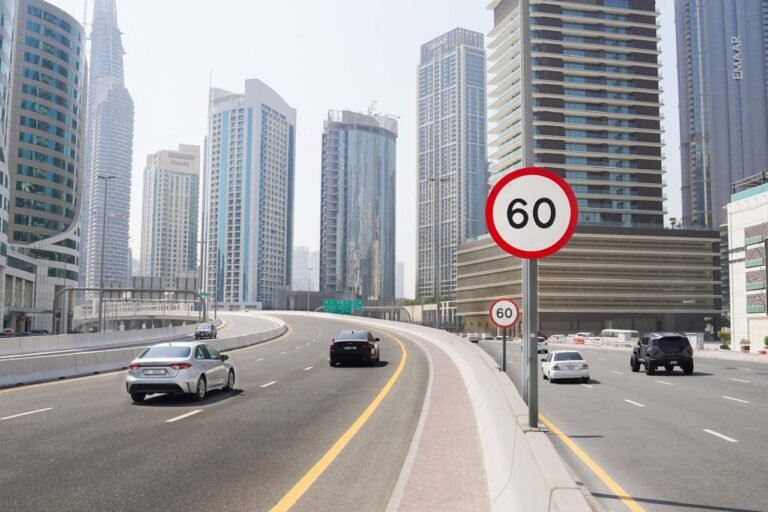
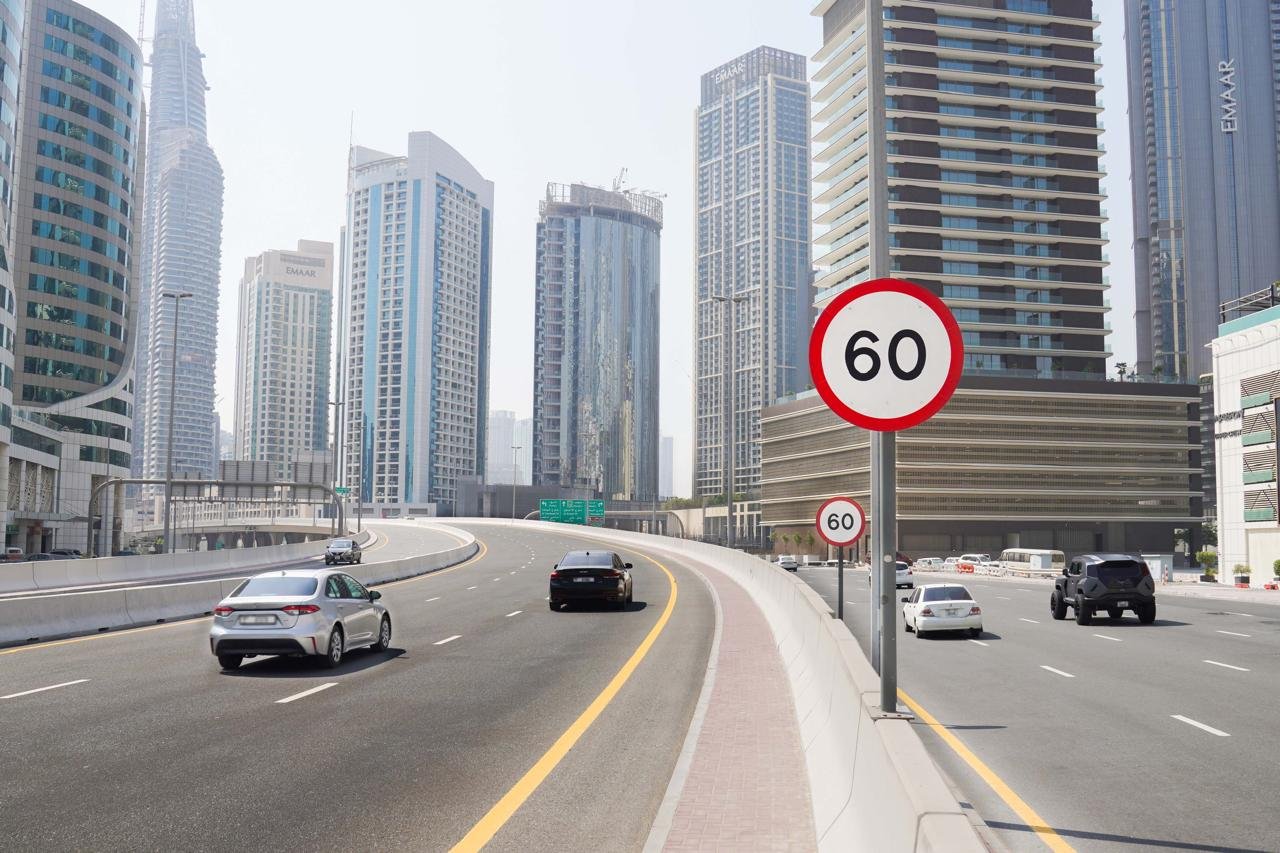
From Al Asayel Street to Al Rebat Street, revised limits will affect daily drives across Dubai.
- RTA and Dubai Police based changes on engineering and safety reviews.
- Speed limits change on five Dubai streets from 1 November 2026.
- Three roads will have higher limits, while two will decrease.
- Speed cameras will be reprogrammed to reflect the revised limits.
A familiar route can become a very different drive when the numbers on roadside signs change. For Dubai motorists travelling between Oud Maitha, Al Meydan, Sheikh Zayed Road and Al Khail Road, checking the speed limit will be especially important from 1 November 2026. Dubai speed limits are changing on five key streets, with three increases and two reductions. Here’s what drivers need to know before their next trip.
A commute through Oud Maitha towards Al Meydan could soon allow a higher maximum speed on part of the route. On Al Asayel Street, the limit will rise from 60 to 80 km/h between Oud Maitha Street and Al Meydan Street, in both directions. That’s a 20 km/h increase. Drivers should follow the revised signs once the change takes effect.
For motorists heading between Sheikh Rashid Street and Al Meydan Street, Al Mustaqbal Street will move from 60 to 70 km/h. A similar increase applies to Latifa bint Hamdan Street, where the limit will rise from 60 to 70 km/h between Sheikh Zayed Road and Al Khail Road. Both changes apply in both directions. Check the signs along your route.
Two other roads will have lower limits. Al Rebat Street will drop from 100 to 90 km/h between Marrakech Street and Sheikh Mohammed bin Zayed Road, while Sheikh Sabah Al Ahmad Al Jaber Al Sabah Street will move from 80 to 70 km/h between 2nd December Street and Khalid bin Al Waleed Street. The reductions also apply in both directions. A familiar stretch may now require a lighter foot.
Speed limits are set with more in mind than how quickly traffic usually moves. RTA and Dubai Police say their latest adjustments follow engineering and technical studies that consider road design, traffic conditions, vehicle speeds, pedestrian activity and nearby facilities. The aim is to balance traffic flow with safety. Every road has its own conditions.
Drivers should also expect changes to the signs and enforcement systems. RTA will replace speed limit signs along the affected sections, and speed cameras will be reprogrammed to match the revised limits before implementation. Don’t rely on memory alone. Follow the posted limit and watch for updated signs as you travel.
The new limits take effect on 1 November 2026. Before setting off, motorists who regularly use these five roads should review the affected sections and allow time to adjust to the changes. A few seconds spent checking the signs can help keep the daily drive predictable, and safer for everyone sharing Dubai’s roads.