
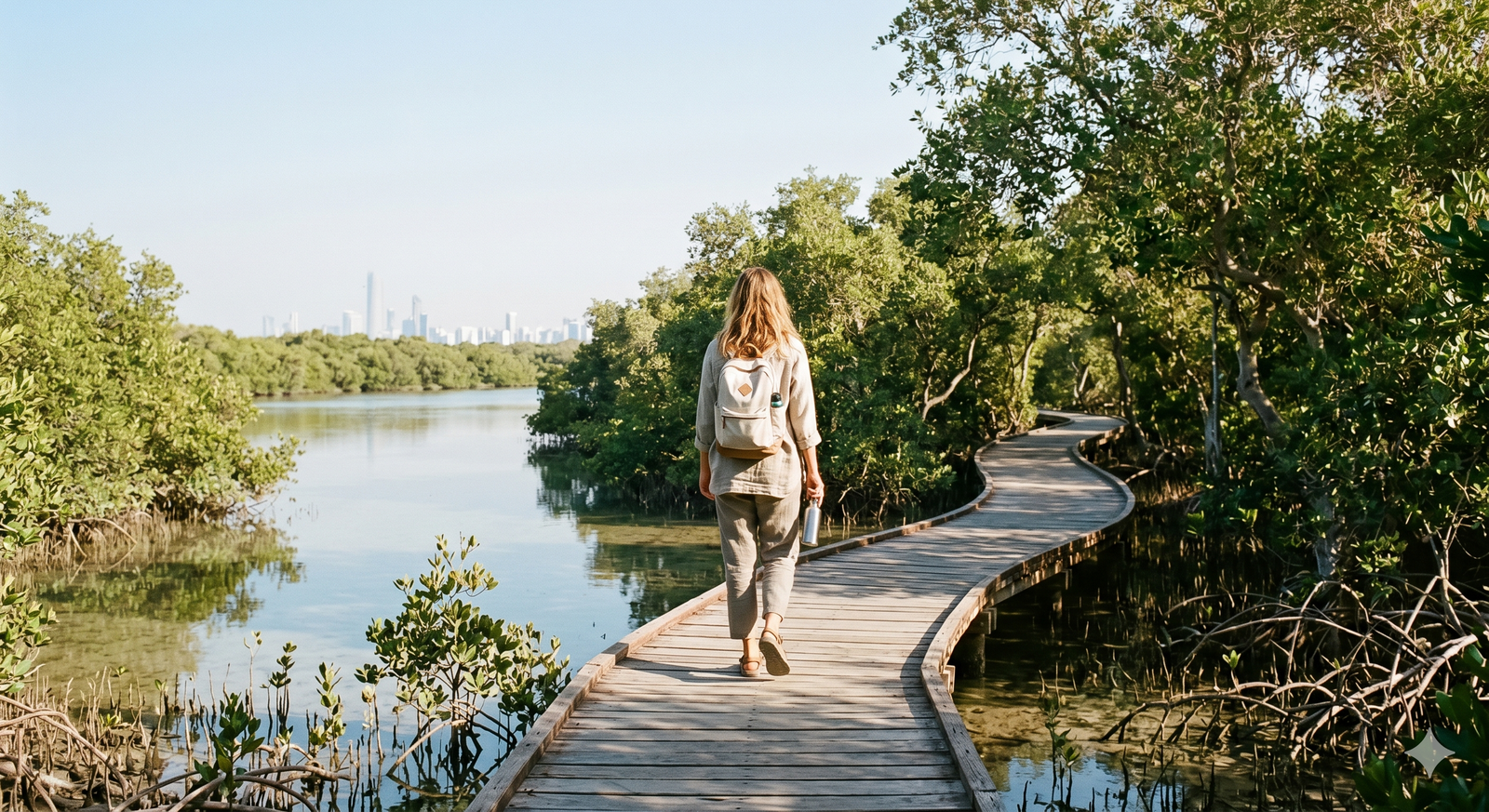
Sustainable travel is not about giving up the trips. It is about making the ones you take worth something beyond the Instagram content.
- 35 percent of global travellers now actively prefer eco-conscious destinations in 2026
- The UAE is ranked among the world’s most sustainable tourism destinations this year
- Slow travel and low-impact itineraries are replacing back-to-back city hopping trends
- Small consistent choices add up to a genuinely different kind of travel footprint
Sustainable travel for UAE residents carries a particular kind of weight. This is one of the most well-travelled populations in the world, a city of people who clock up frequent flyer miles the way other people collect stamps, who think nothing of a long weekend in Bali or a quick trip to Istanbul, and who have built an entire lifestyle around the idea that escape is always just a flight away. That is not a criticism. It is just context. Because sustainable travel does not ask you to stop moving. It asks you to move differently. And in 2026, with the tools and options available, that shift is considerably more accessible than it sounds.
The UAE has positioned itself among the world’s most sustainable and culturally immersive travel destinations in 2026, pairing heritage-led experiences with advanced green infrastructure, demonstrating how ambitious climate goals can coexist with premium tourism growth. That matters for residents here because it means the baseline you are departing from is already higher than most. Globally, 35 percent of people now prefer eco-conscious destinations and are willing to pay more for hotels featuring genuine green tourism practices, a shift that has pushed the entire travel industry to respond with something more substantive than a recycling bin in the hotel bathroom.
The first thing to understand is that sustainable travel is not a single choice. It is a series of smaller ones that compound over time. For UAE-based travellers, a few of the most impactful are worth naming directly.
Choose slow over fast. The single biggest driver of travel emissions is flight frequency, not distance. One longer trip to a destination you explore deeply produces a fraction of the environmental cost of four short weekend breaks by air. Luxury eco-tourism, responsible wildlife safaris and desert sustainability programmes in the southern UAE, especially in conservation areas and desert regions, are becoming top of mind, which means you do not always need to fly at all. The Dubai Desert Conservation Reserve, Al Marmoom and the eco-lodges of Ras Al Khaimah offer genuine slow-travel experiences within driving distance of Dubai.
Choose where you stay carefully. Dubai’s sustainable tourism guide features carbon reduction, water conservation and waste management, with the continued integration of renewable energy sources and smart city technologies establishing the city as a responsible tourism benchmark. Globally, look for properties with third-party green certification rather than self-declared eco credentials. The difference between a hotel that uses bamboo straws and one that has genuinely restructured its energy, water and supply chain is significant and worth the ten minutes of research before booking.

Pack with intention. The fastest way to reduce your travel footprint before you even leave home is to pack less and pack smarter. Lighter luggage means lower fuel consumption per passenger. Reef-safe sunscreen, a reusable water bottle, solid toiletries that do not require plastic packaging, these are small choices that become habitual remarkably quickly.
Spend locally. Sustainable eco-itineraries prioritise locally run stays and tours that respect fragile habitats, supporting guides, rangers, craftspeople and small businesses in remote areas. The most direct environmental and economic benefit of responsible travel is putting money into the communities surrounding the places you visit rather than into international chains that export their profits elsewhere.
The reason most sustainable travel intentions collapse by the second day of a holiday is that they are framed as sacrifice. You cannot eat that, you cannot stay there, you cannot take that flight. That framing is both inaccurate and exhausting. The more durable version of sustainable travel is curiosity-led. What is actually grown here? Where do locals actually eat? What would this place look like if I walked it instead of drove it? That orientation tends to produce better trips anyway, and leaves a lighter mark behind.
By embedding sustainability across infrastructure, visitor experiences and governance frameworks, the UAE has created a scalable, globally recognised model for high-quality, low-impact tourism. The infrastructure is there. The destination options are expanding. The only thing left is the decision to engage with travel a little more intentionally than before.
Start with your next trip. One choice at a time is enough!