
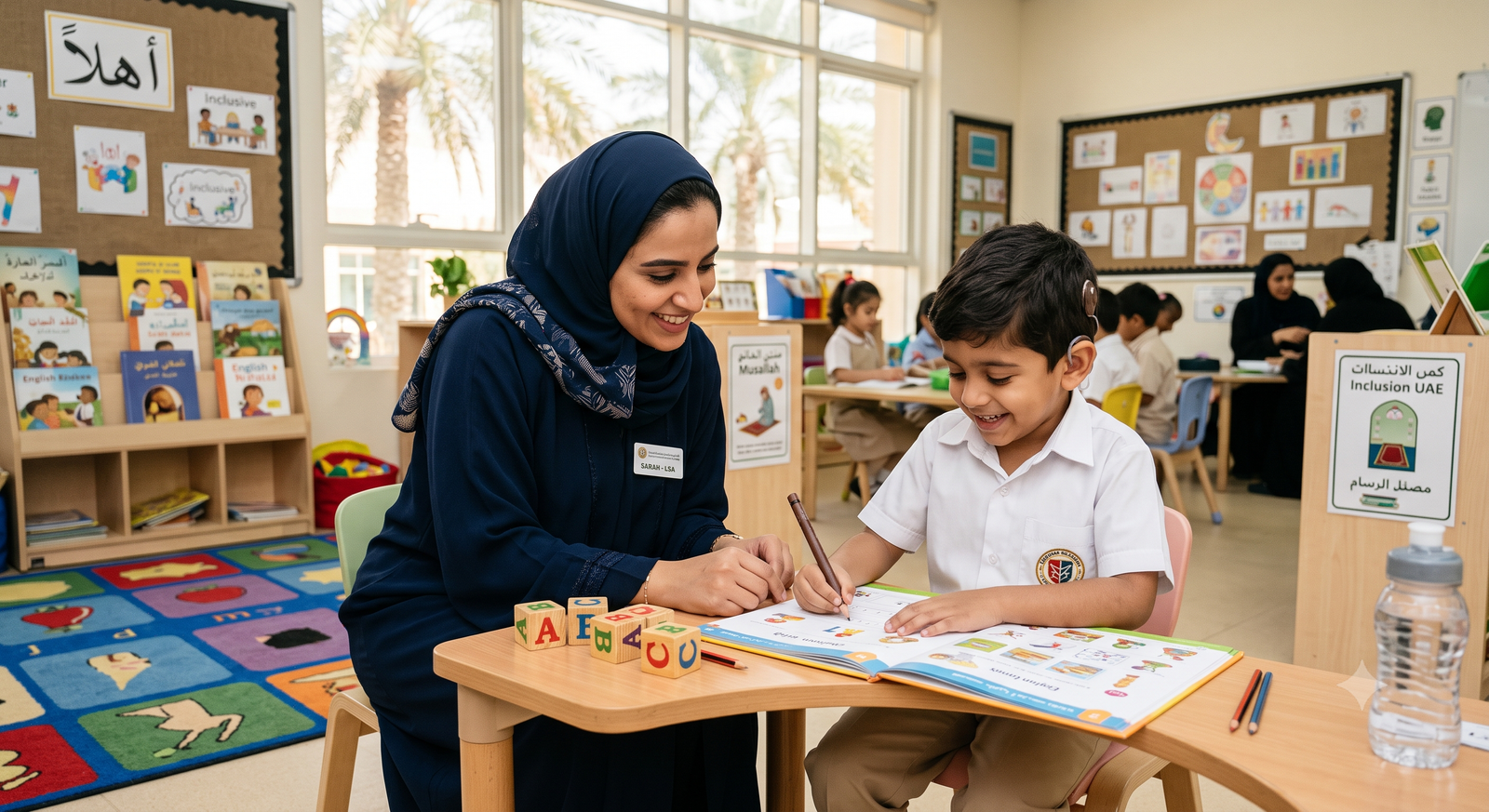
Three experts across education, psychology, and inclusive technology share how the UAE is supporting children of determination and what families can do to help their child thrive.
- The UAE’s Ministerial Resolution 647 of 2020 mandates all schools to support students of determination.
- No UAE school can turn away a child of determination under the Dubai Inclusive Education Framework.
- Individualised Education Plans are the cornerstone of special needs support in UAE classrooms.
- Early identification and early intervention are the single most important factors in long-term outcomes.
Every child deserves an education that sees them fully. Not a version of education designed for someone else, adapted slightly to accommodate differences, but one that genuinely starts with who the child is, what they need, and what they are capable of when the right support is in place. The UAE has built one of the most comprehensive inclusive education frameworks in the region, with the Dubai Inclusive Education Policy Framework empowering education providers, regulatory authorities, and governing bodies to monitor progress and compliance across all education sectors from early childhood through higher education. Ministerial Resolution No. 647 of 2020 directs government schools to adapt themselves to cater to the needs of people of determination and provide them with the best education services, and the Ministry’s People of Determination Department, established in 2008, continues to protect the rights of students of determination and ensure equal opportunities across the system. For UAE parents navigating this landscape, whether for the first time or after years of advocacy, understanding how the system actually works is the most important place to start. We spoke to three experts across school leadership, clinical psychology, and inclusive education technology to find out exactly what that looks like right now.
Ms. Deepika Thapar Singh, CEO-Principal, Credence High School Dubai
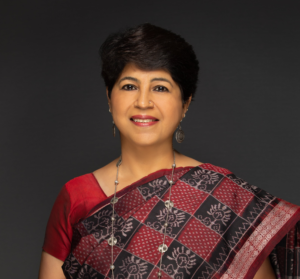
Ms. Deepika Thapar Singh leads one of Dubai’s most established school communities and brings years of direct experience implementing inclusive education frameworks across diverse student populations. Her starting point is one that reframes how most people think about special needs support entirely.
“Support is not simply about extra help,” she says clearly. “It is about identifying a student’s strengths, understanding barriers to learning, and providing the right support at the right time.” The UAE’s approach is distinctive, she explains, precisely because it promotes equity rather than a one-size-fits-all model, encouraging genuine collaboration between students, teachers, the Inclusion and Wellbeing Team, families, and external professionals to ensure every student has the opportunity to achieve their potential.
Inside a UAE classroom, that support takes several practical forms depending on the individual child’s needs. Differentiated instruction and classroom accommodations provide the first layer of access, ensuring the curriculum is genuinely reachable rather than simply present. Push-In support, where inclusion specialists work alongside subject teachers within the mainstream classroom, allows students to remain with their peers while receiving targeted assistance. Where more intensive support is needed, Pull-Out sessions with the Inclusion and Wellbeing Team provide focused intervention outside the classroom. Individual Learning Support Assistants and School Learning Support Assistants work directly with students whose needs require more consistent one-to-one presence throughout the day. “Their progress is regularly monitored to ensure that support remains appropriate and promotes curriculum access, participation, and independence,” Ms. Deepika explains.
Her message to parents is both practical and deeply reassuring. Early identification matters enormously. Open communication with the school makes a measurable difference. And the process works best when families understand themselves as key partners in it rather than recipients of it. “Inclusion is not about lowering expectations,” she says. “It is about removing barriers and enabling every student to participate, learn, and achieve their potential.”
Amina Shazib, CDA Licensed Psychologist and Head of Inclusive Education Services, Emerge Dubai
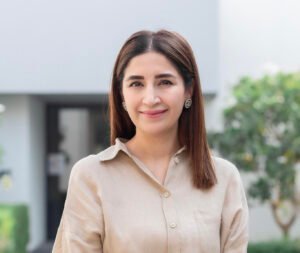
Amina Shazib brings nine years of clinical psychology experience to her work in inclusive education, and her perspective on how the UAE system has evolved sits at the intersection of policy understanding and direct family practice. She begins with a point that many UAE parents navigating the system for the first time find immediately clarifying.
“The core idea is simple: schools shouldn’t turn a child away because of a disability,” she says. “Instead, they’re expected to accommodate the child, so parents aren’t stuck going door to door hoping someone finally says yes.” The UAE’s updated definition of inclusive education describes students with determination learning in shared educational environments, with targeted supports to remove barriers, ensure high participation, and prevent exclusion, and Shazib’s experience is that this principle is increasingly being applied in the day-to-day reality of UAE classrooms rather than remaining purely at the policy level.
What day-to-day support looks like in practice is, she emphasises, genuinely individual. No single model fits every child, and two children with the same diagnosis can need entirely different environments and strategies to thrive. For some children, a smaller structured group is the right fit. For others, a mainstream classroom with specific accommodations produces the strongest outcomes. “Support isn’t only academic,” she notes. “It’s communication, emotional regulation, independence, often through visual timetables and structured routines that become part of a child’s daily rhythm.” The multidisciplinary team around the child, special educators, psychologists, speech and occupational therapists, parents reinforcing strategies at home, is what allows that individual support to be consistent across every environment the child moves through.
Her most important message for UAE parents is one that every family navigating this journey needs to hear clearly and early. “I would encourage parents not to wait for a child to ‘catch up’ before seeking support. Early identification and early intervention are key, and they can make a significant difference to a child’s long-term development.” The question she encourages families to ask is not which school has the best reputation in general but which environment is the right fit for this specific child. “The key principle is that we should be fitting the support around the child, rather than trying to fit the child into a fixed system.” And finally, the reminder that perhaps matters most: “Parents should know that they are not expected to navigate this journey alone. When families and professionals work together, keep communication open, and consistently centre the child’s strengths, voice, dignity and long-term independence, the outcomes are always stronger.”
Hannan Moti, Co-Founder, iCodeJr
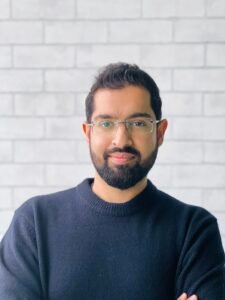
Hannan Moti approaches special needs education from a perspective that most conversations about inclusive learning in the UAE do not include: the role of technology, digital skills, and non-traditional learning pathways in unlocking potential for children of determination. As co-founder of iCodeJr, he has worked directly with neurodiverse learners and seen first-hand what happens when the environment genuinely adapts to the child rather than the other way around.
“The UAE made a clear shift towards inclusive education as early as 2004,” he notes, “and what feels distinctive here is the combination of national commitment, a diverse school system, and a strong willingness to bring schools, specialist centres and external education providers together.” The growing attention on future skills, not only academic access, is something he identifies as one of the most significant recent shifts in how the UAE thinks about what education for children of determination should actually achieve.
His description of effective day-to-day support aligns closely with the other experts but adds a dimension that is worth its own attention. “The most important point is that the child should not constantly have to adapt to the classroom. The environment and teaching should also adapt to the child.” In practice, within his own work, that has meant visual coding tools, sensory-aware pacing, and individual progress tracking that allows educators to respond to each learner rather than simply deliver a standard lesson. The professionals involved, inclusion leads, special education teachers, learning support assistants, speech and occupational therapists, psychologists, and behaviour specialists, are most effective when their communication with each other is as strong as their individual expertise.
His perspective on where the UAE system needs to go next is specific and forward-looking. “The greatest progress has been the move from simply placing children in mainstream settings towards thinking more carefully about participation, individual support and meaningful outcomes.” The next step he advocates for is creating clearer pathways from school into higher education, employment, and greater independence, recognising that the goal of inclusive education is not simply classroom participation but a whole life lived with agency and contribution. His advice to parents is both practical and expansive. Start conversations with the school early. Ask specific questions about assessment, coordination, and progress review. And look beyond traditional academics. “A child may reveal confidence, communication skills or strong problem-solving abilities through technology, art or another interest. The right environment can uncover strengths that a conventional classroom may miss.”
Three experts, three different professional lenses, and one consistent message running through every response: the UAE’s special needs education system is built on a genuinely progressive foundation, and the families who navigate it most successfully are the ones who engage early, communicate openly, and understand themselves as essential partners in their child’s education rather than passive recipients of a service. The policy is strong. The professionals are committed. And the system, at its best, starts not with a diagnosis or a label but with a question that every child of determination deserves to have asked about them: what are this child’s strengths, what is standing in their way, and what can we change to help them thrive?
For parents beginning this journey, the advice from all three experts is the same. Do not wait. Reach out to your school’s inclusion team. Ask for an assessment. Seek out the multidisciplinary support that exists across the UAE’s educational landscape. And know that you do not have to figure this out alone!