
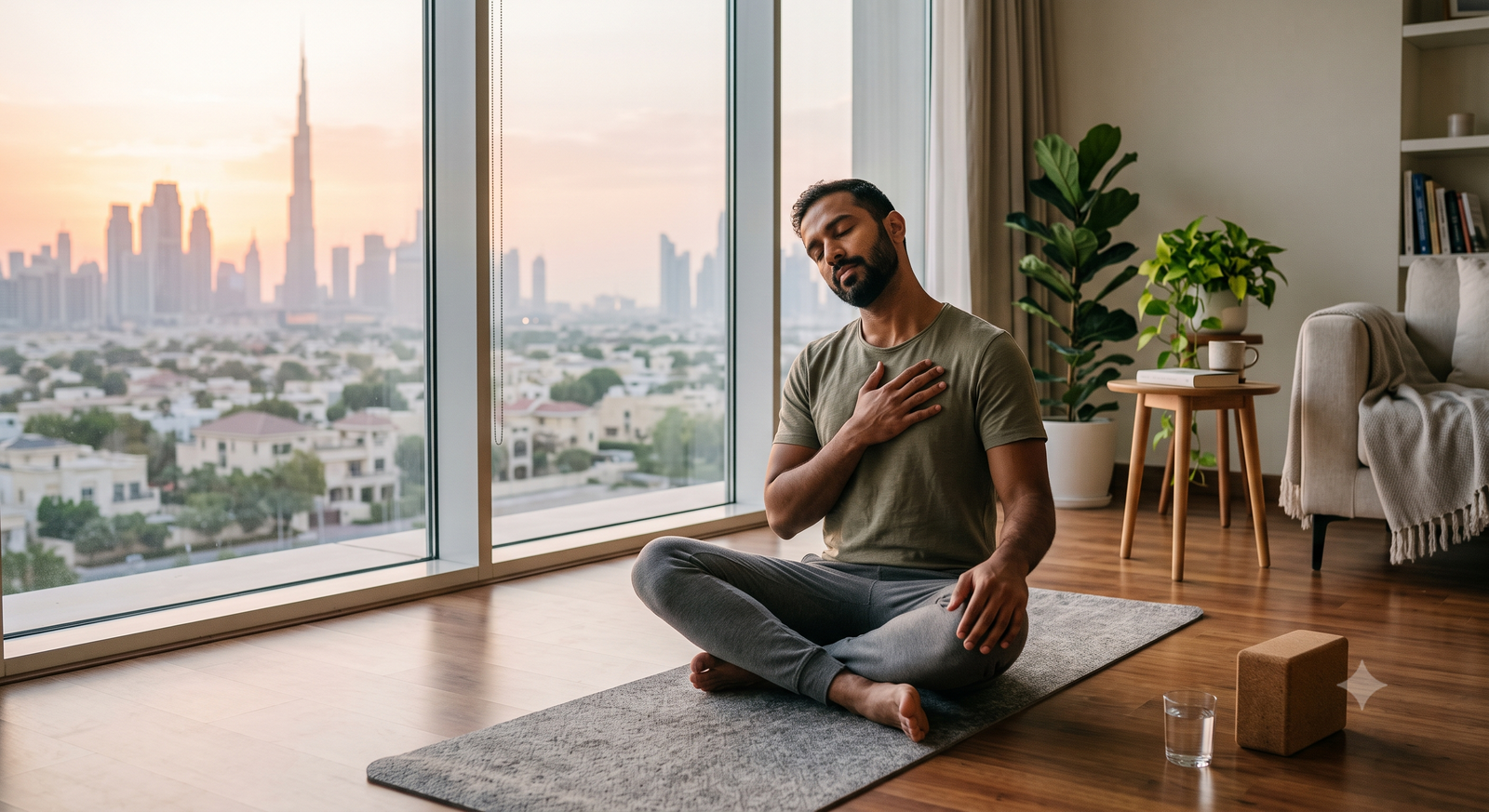
The reason most UAE fitness routines fail by month three has nothing to do with motivation and everything to do with recovery.
- Overtraining without adequate recovery raises cortisol and actively reverses fitness progress.
- Most UAE residents need two to three recovery days weekly for sustainable long term results.
- Consistency over intensity is the single most evidence-backed principle in fitness science.
- Habit stacking small daily wellness actions produces more lasting change than big overhauls.
Every January, and every time a new fitness goal takes hold, the same pattern plays out across Dubai. The motivation is real. The gym bookings are stacked. The meal prep is done. And then somewhere between week six and week ten, the whole thing quietly collapses. Not because of laziness or lack of willpower but because the routine was never built to last in the first place. People are shifting toward routines designed to improve healthspan rather than just lifespan, focusing on mitochondrial support, inflammation reduction, stress resilience, and hormone balance through simple daily habits, and the critical insight buried in that shift is this: simple and consistent always outperforms intense and unsustainable. For UAE residents building or rebuilding their wellness routines this Monday morning, that is the most important thing to understand before doing anything else.
Why Recovery Is the Missing Half of Every Dubai Fitness Routine
The fitness culture in Dubai leans hard toward intensity. More classes, heavier weights, longer sessions, fewer rest days. It is the same high-performance energy that makes the city extraordinary to work in and genuinely exhausting to recover in. Creating a sustainable wellness routine requires balancing fitness goals with smart recovery, because without adequate rest the body cannot adapt to training stress, cortisol remains chronically elevated, and the progressive improvements that make fitness rewarding simply stop happening. Recovery is not a reward for hard work. It is the mechanism through which hard work actually produces results. Two to three deliberate recovery days per week, including at least one complete rest day, one active recovery day involving walking or gentle stretching, and one mobility-focused session, is the baseline that exercise science consistently recommends for long-term progress without injury or burnout.
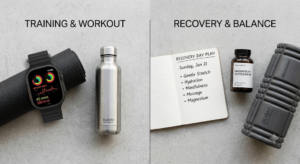
The practical framework for a sustainable routine is built on three principles that most gym programmes skip entirely. The first is progressive overload applied gradually rather than aggressively, meaning small, consistent increases in challenge over weeks and months rather than dramatic intensity spikes that the body cannot adapt to quickly enough. The second is habit stacking, anchoring new wellness behaviours to existing daily routines so they require no additional motivation to maintain. Movement snacks, short bursts of movement scattered throughout the day, counter prolonged sitting, support joint health, and keep metabolism active as a more sustainable alternative to long infrequent workouts, and attaching them to existing habits like making coffee or finishing a meeting removes the activation energy barrier that kills most new routines within weeks. The third principle is what exercise scientists call minimum effective dose, identifying the smallest consistent action that produces meaningful results and starting there rather than with the most ambitious version of the routine you aspire to maintain.
Functional training including mobility work, balance drills, loaded carries, and kettlebell exercises for real-life strength and longevity is among the fastest-growing wellness categories in 2026, precisely because it produces results that transfer directly into how people feel day to day rather than just how they perform in a gym. For Dubai residents spending long hours at desks, navigating summer heat, and managing the cumulative stress of a high-pressure professional environment, functional strength and mobility are far more relevant health investments than aesthetic-focused training programmes that demand peak energy and motivation every single session. After years of self-improvement in isolation and hyper-digital living, people are realising that true wellness depends on connection and community, which is why the most sustainable fitness routines in Dubai in 2026 are the ones that involve other people, whether a consistent workout partner, a run club, or a regular class where familiar faces create accountability that no app can replicate.
This Monday, instead of asking how hard you can push this week, ask what you can sustain for the next six months. The answer to that question is your actual wellness routine. Everything else is just enthusiasm waiting to expire!