Ancient texts called it greater than the Ganges and the Indus combined. Then it disappeared. The story of India’s most mysterious lost river is only getting more fascinating.
- The Saraswati is described in the Rig Veda as the greatest river of the ancient world
- Over a thousand Harappan civilisation sites cluster along its now-dry ancient course
- Satellite imagery by ISRO has revealed the river’s paleochannel beneath the Thar Desert
- The goddess Saraswati, deity of wisdom and learning, was originally the river personified
The Saraswati River India’s oldest sacred texts describe with such reverence and such specificity has been dismissed for centuries as mythology. A river greater than the Indus. Greater than the Ganges. A mighty, glacier-fed torrent flowing from the Himalayas all the way to the sea, sustaining the most advanced urban civilisation the ancient world had ever seen. It sounded like poetry. Then satellite imagery revealed a paleochannel stretching across the Thar Desert, three to ten kilometres wide in places, studded with the ruins of more than a thousand settlements. The river was real. And the civilisation it sustained may have been even more extraordinary than anyone imagined.
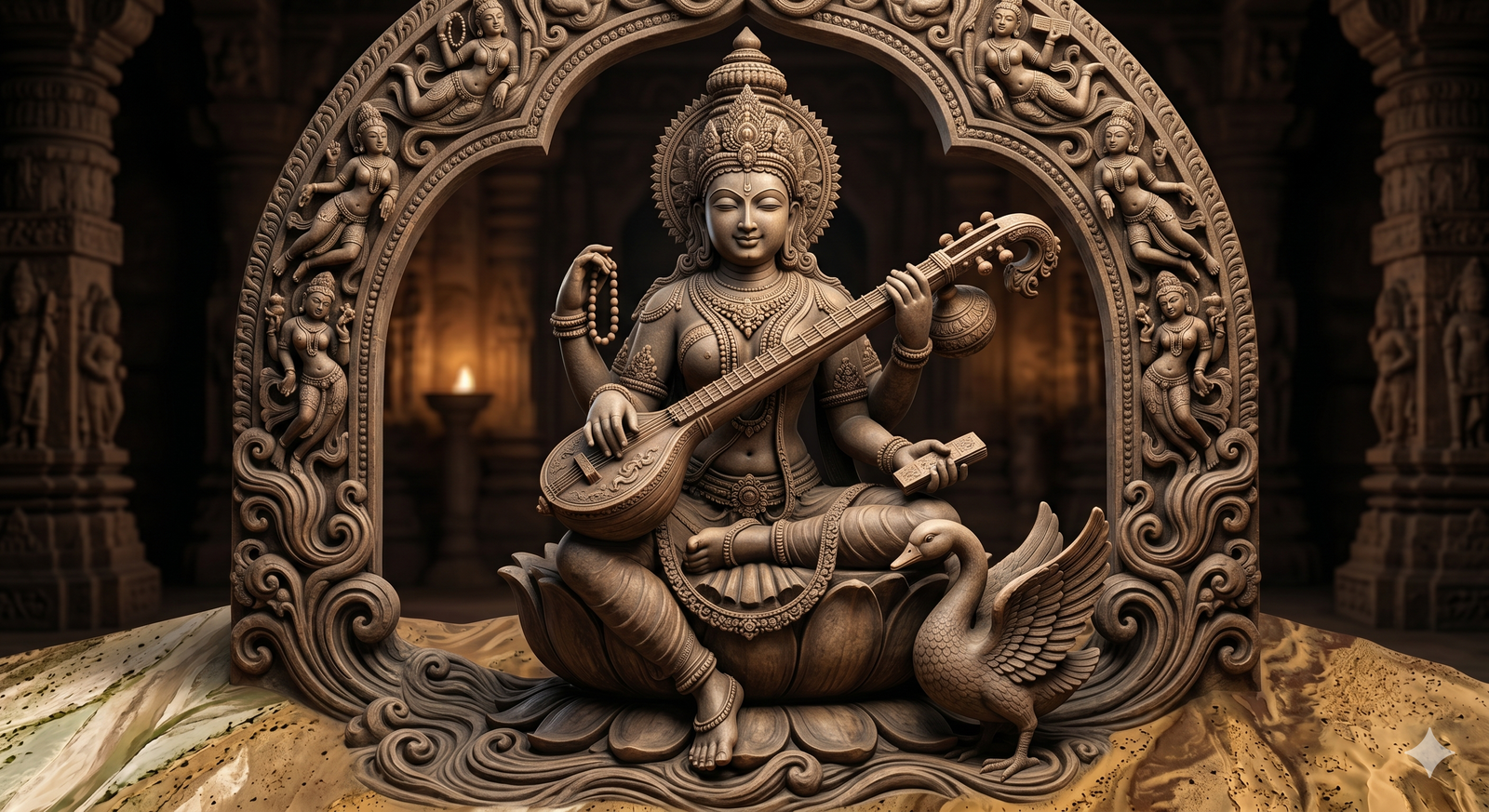
The Saraswati River is mentioned in the sacred Hindu works known as the Rig Veda. It is mentioned in several holy hymns and was seen as the route to paradise after death. The goddess Saraswati, the deity of learning and wisdom, was originally the personification of the river. The texts call her “best of mothers, best of rivers,” a description that carries both geographical and spiritual meaning. In the ancient Indian worldview, a river was never simply water. It was sustenance, boundary, sacred geography and living deity simultaneously. The Saraswati was all of these things at once and the greatest of all of them.
The Rig Veda describes the Saraswati as a river greater than the Indus and the Ganges, which flowed from the mountains to the oceans. Since none of the existing rivers in India fit this description, the Saraswati has often been dismissed as legend or a figment of poetic imagination. However, in recent years, geologists, historians and archaeologists have attempted to determine whether the great Saraswati did indeed exist. The answer they arrived at, through topographic exploration, geological studies, satellite imagery and isotope analyses, is that it did. And the civilisation that grew along its banks was the largest of its time anywhere on earth.
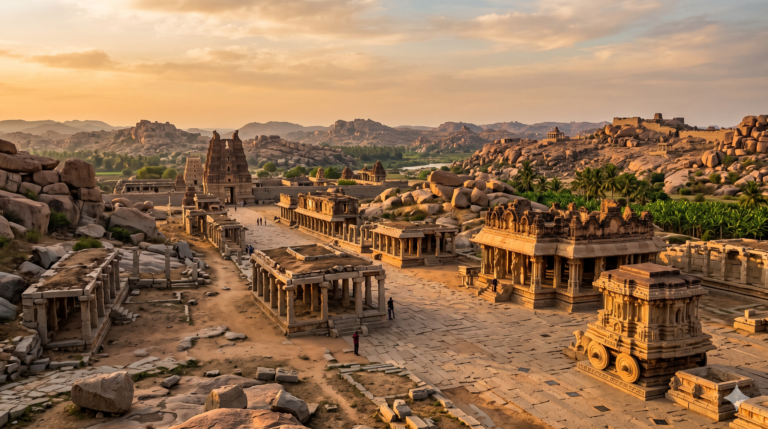
The ancient riverbed of the Ghaggar-Hakra system, visible as a vast paleochannel and in some places three to ten kilometres wide, is densely studded with settlements from the Indus Valley Civilisation. While major cities like Mohenjo-Daro and Harappa were on the Indus River itself, over a thousand sites, including major urban centres like Kalibangan and Rakhigarhi, one of the largest Harappan sites, are clustered along this Ghaggar-Hakra system. This clustering confirms the river’s central role in Bronze Age urbanism between 3300 and 1900 BCE and has prompted many scholars to rename the culture the Indus-Saraswati Civilisation.
The scale of what this means is genuinely astonishing. The Harappan or Indus Valley Civilisation, already regarded as one of the most sophisticated of the ancient world, with planned cities, advanced drainage systems, standardised weights and measures, and trade networks stretching from Mesopotamia to Central Asia, was not built primarily along the Indus. It was built along a river that no longer exists.
Archaeological excavations in Harappan and Vedic sites such as Kalibangan, Rakhigarhi and Dholavira show evidence of a flourishing civilisation nourished by the Saraswati basin, and modern satellite imagery and hydrological studies by ISRO and other agencies have revealed paleochannels confirming the river’s ancient course beneath the Thar Desert. The desert that appears timeless and unchanging is in fact a record of catastrophic change. Beneath its surface runs the ghost of a river that once sustained millions.
The Sutlej diverted its course about 10,000 to 8,000 years ago, turning the Ghaggar-Hakra into a rainfed river system. The Harappan civilisation emerged on the course of the river system 5,000 years ago after the monsoons diminished. The Harappan civilisation is believed to have ended 4,000 years ago after the further decline of monsoons dried up the Hakra.
This diversion coincided with a severe, prolonged drought that weakened monsoon rains, preventing the river from sustaining itself. The cities along its banks did not fall in battle. They were not conquered or burned. They were simply gradually abandoned as the water retreated, the fields dried out and the logic of staying in one place evaporated along with the river itself. The populations dispersed. The cities were buried by sand. The river became a memory so large and so powerful that it entered scripture as a goddess.
In Hindu tradition, the Ghaggar-Hakra, often revered as the Saraswati, is considered a sacred river symbolising purity and knowledge. Rituals and pilgrimages along its course are still observed in certain regions of Haryana and Rajasthan. People walk to a riverbed that carries water only in monsoon months, performing the same rituals their ancestors performed beside a roaring glacier-fed torrent thousands of years ago. The devotion has outlasted the water by millennia.
The Government of India and state agencies like the Haryana Saraswati Heritage Development Board are working on rejuvenation projects to trace and restore parts of the river, linking revival efforts with groundwater recharge, ecological restoration of dry regions and cultural tourism development. Whether the river can be meaningfully revived is a question that sits at the intersection of hydrology, ecology and politics. What is not in question is the scale of what existed here once, and the extraordinary lengths to which an ancient civilisation went to leave a record of its loss.
The Saraswati is not a myth. It is a river that died, leaving behind its ghost in a desert, its name on the tongue of a goddess and more than a thousand cities slowly surfacing from the sand!