
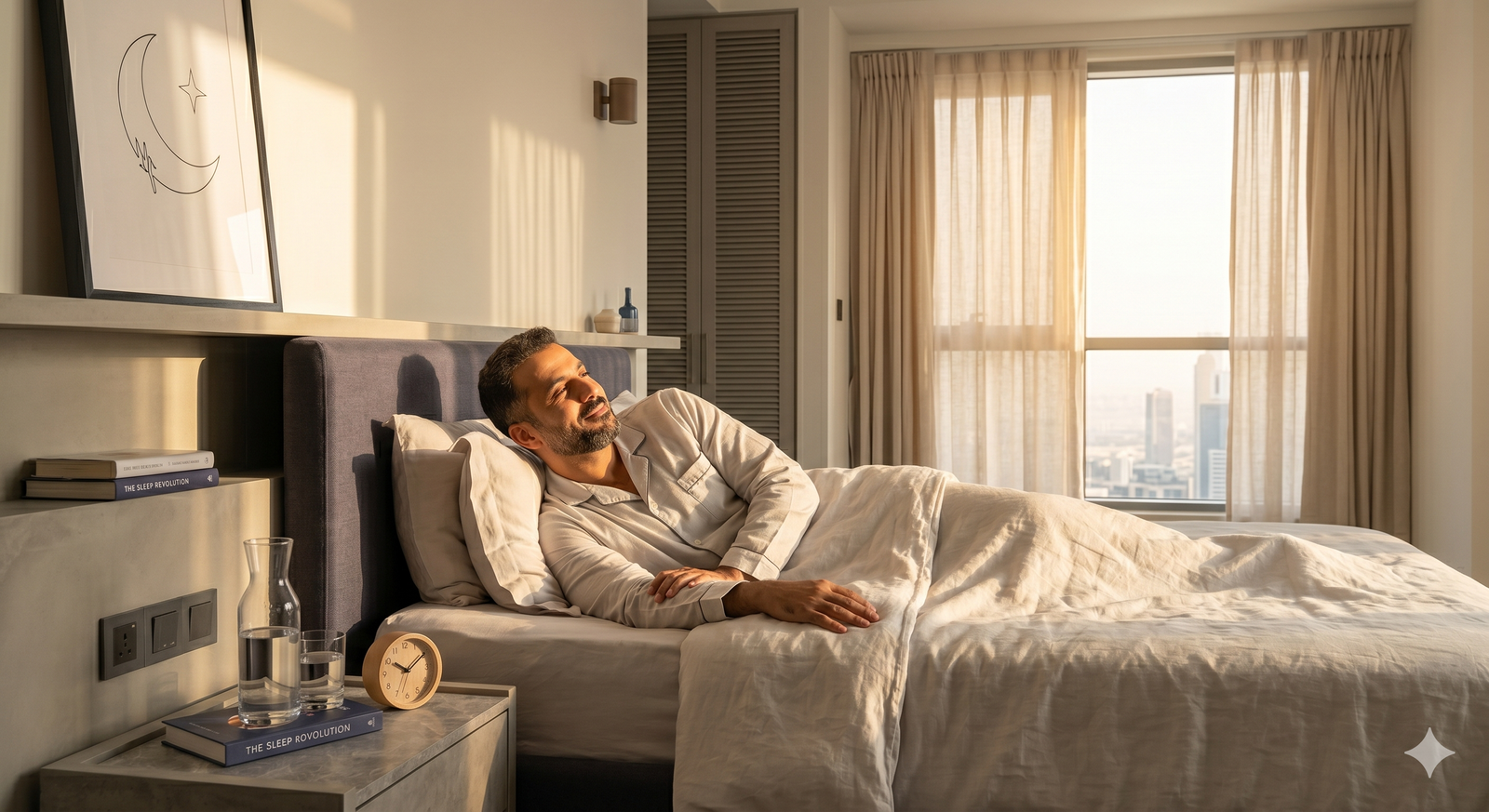
65 percent of UAE residents are not getting enough sleep and the consequences go far deeper than feeling tired.
- 65 percent of UAE residents lack proper sleep according to a major regional survey.
- Sleep deprivation makes the brain’s fear centre 60 percent more reactive to stress.
- Poor sleep in Dubai is driven by screen time, late nights, and constant connectivity.
- Seven to nine hours of quality sleep is the single most powerful health tool available.
Monday morning arrives and most UAE residents reach for their phone before they’ve fully opened their eyes. Then the coffee. Then the second coffee. Then they wonder why by 3 PM they feel like they are moving through wet concrete. A major study revealed that 65 percent of UAE residents lack proper sleep, with heavy smartphone usage identified as one of the primary drivers of sleep deprivation across the region. This is not a niche health statistic. It is the most widespread and consequential wellness issue in the UAE, and it is hiding in plain sight every single Monday morning across the city.
The scale of the problem is genuinely startling when you look at it clearly. A 2024 study found that nearly 30 percent of adults in the UAE are sleep deprived, with those affected more likely to report frequent headaches, low mood, and symptoms associated with depression. Among younger populations, particularly university students, research consistently shows poor sleep quality, irregular bedtimes, and high levels of daytime fatigue, often linked to late-night screen use and inconsistent routines. A separate survey polled more than 950 UAE residents and found that more than 40 percent are not getting the right amount of sleep and could improve their sleep quality significantly. Three different studies. Three different methodologies. All pointing to the same conclusion: Dubai is a city that does not sleep enough, and it is paying a very real price for that choice.
The reasons are specific to how life works in this city. Dubai’s illuminated skyline and screen-heavy lifestyles disrupt melatonin production, the hormone that signals sleep. Relocation, financial pressure, and lack of extended family support contribute to racing thoughts at bedtime. High evening temperatures push outdoor activities and socialising late into the night. Add to that the 24/7 connectivity of a global business hub where someone in a different time zone always seems to need a response, and the conditions for chronic sleep deprivation are basically built into the architecture of daily Dubai life. Many residents admit they sleep less than six hours a night, far below the recommended seven to nine hours, and while short-term sleep loss feels manageable, research shows chronic poor sleep raises risks for anxiety, depression, burnout, and reduced performance at work and in daily life.
The consequences reach further than most people realise. Brain imaging studies show that after sleep deprivation, the amygdala, the brain’s fear centre, becomes 60 percent more reactive. This means the irritability, the disproportionate reactions, the feeling that everything is slightly more difficult than it should be on a Monday morning, is not a character flaw or a caffeine deficit. It is your sleep-deprived brain responding to the world with significantly amplified threat sensitivity. Health experts warn that sleep deprivation influences how people think, eat, move, and cope with stress, creating a cascade of behaviours that play a critical role in long-term health outcomes. Poor sleep leads to worse food choices. Worse food choices affect energy. Low energy reduces motivation to exercise. Reduced exercise makes sleep harder. The cycle is both vicious and extremely well-documented.
The practical interventions are simpler than most people expect. Abu Dhabi’s health strategy is increasingly shifting towards prevention, with a focus on encouraging healthier routines before medical intervention becomes necessary, recognising that sleep health is shaped not only by biology but also by daily habits and environments, including digital behaviour, nutrition, physical activity, and stress management. Concretely, this means putting the phone face down at least one hour before bed. It means keeping the bedroom dark, cool, and quiet. Research from the UAE confirms that complete darkness is valued by 94 percent of good sleepers, silence by 83 percent, and a cool room temperature by 74 percent, making these the three most evidence-backed environmental adjustments any Dubai resident can make tonight without spending a dirham. It means eating your last meal at least two hours before sleeping and avoiding caffeine after 2 PM regardless of how the afternoon feels.
Sleep is not a luxury or a reward for a productive week. It is the foundation on which everything else in your wellness routine either stands or collapses. Before the next supplement, the next fitness class, or the next self-care ritual, fix your sleep. Everything else works better when you do!