From quicker vehicle licensing to smarter bus routes, here’s what the plan means for residents.
- An AI bus planner will use around 20 specialised agents.
- RTA’s updated strategy spans 41 areas and plans 200 AI products.
- Mahboub will complete five vehicle licensing services in under five minutes.
- Traffic congestion reduction targets reach up to five per cent.
Anyone driving through Sheikh Zayed Road during the morning rush knows that a few minutes can make a considerable difference to the day. A delayed vehicle registration, a long service queue or an unpredictable bus connection can add to the pressure. Dubai AI Strategy is now targeting these everyday frustrations, with the Roads and Transport Authority (RTA) planning a major expansion of artificial intelligence across the emirate’s transport network and government services.
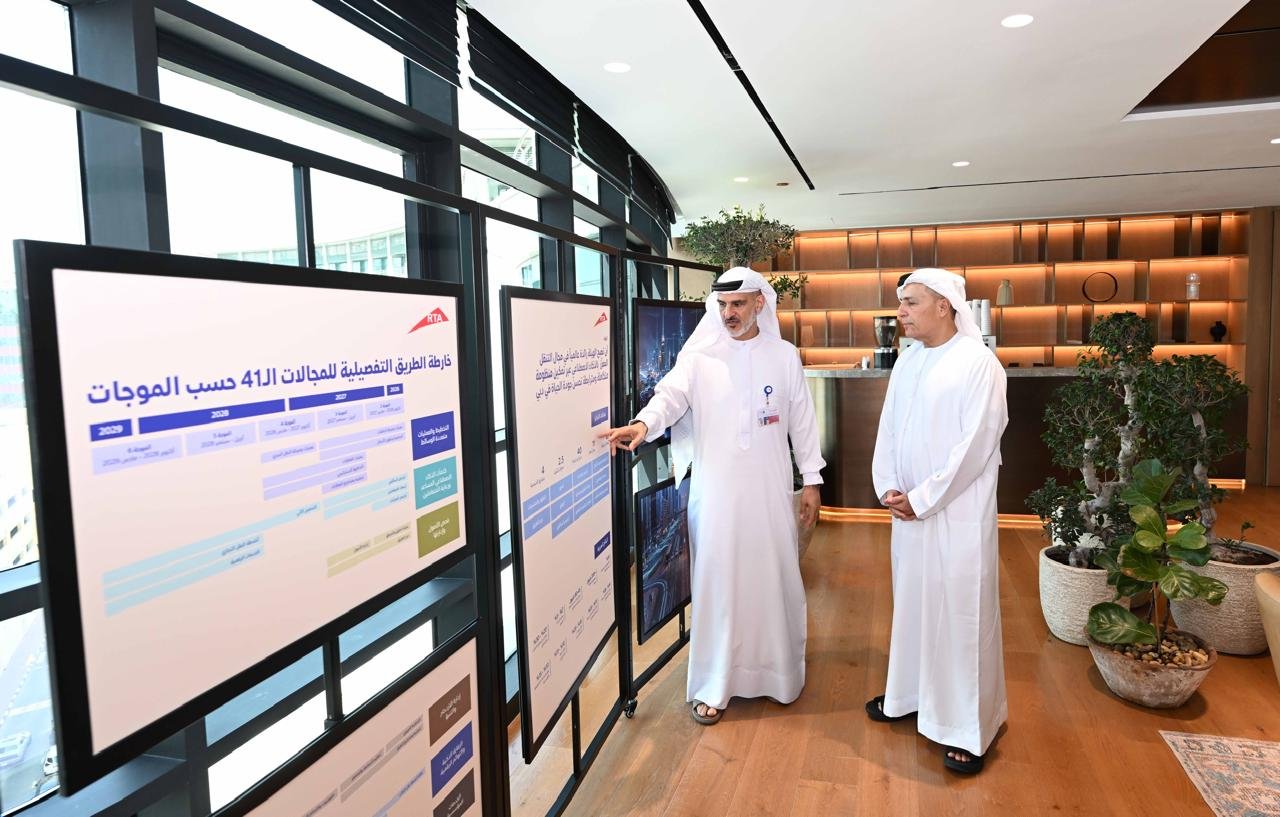
Announced by RTA Director General Mattar Al Tayer on 1 November, the updated strategy covers 41 areas across the authority. Over the next two and a half years, it plans to develop 200 AI products, generate more than AED 300 million in annual added value and move 50% of operations and services towards an Agentic AI ecosystem.
For residents renewing vehicle registrations or checking licensing requirements, one of the most visible changes could come through Mahboub, RTA’s virtual assistant. Its upgraded version will use Agentic AI to handle complete transactions through the RTA app, website and WhatsApp, rather than simply answering questions. Five vehicle licensing services can already be completed through the platform, alongside access to around 100 information services. With UAE PASS and Dubai Pay integration, vehicle-related transactions can take less than five minutes.
Roadworks bring another familiar challenge. Contractors and developers applying for No Objection Certificates often depend on timely approvals, and RTA’s new electronic NOC system is designed to speed up that process. Handling around 130,000 certificates annually, it targets a threefold faster review process and more than 700,000 days saved each year. That’s a significant administrative change.
Meanwhile, commuters relying on buses could benefit from smarter network planning. RTA’s Agentic AI-powered Bus Network Planner uses around 20 AI agents to identify service gaps, assess performance and simulate alternative routes. It aims to improve bus punctuality by up to 10% and reduce the time needed to implement service changes from 60 to 48 days. Better planning could mean more reliable connections.
The wider shift is already taking shape. RTA reported in June that its AI-powered bus operations dashboards contributed to a 68% reduction in early bus departures, showing how data-led systems are being applied to everyday transport management. The scale of demand makes this important: Dubai recorded approximately 348.1 million public transport, shared mobility and taxi riders in the first half of 2026.
For motorists, the strategy targets a 3% to 5% reduction in traffic congestion. Other goals include cutting customer complaints processing times by up to 30%, reducing waiting times at Customer Happiness Centres by up to 16% and lowering accidents involving newly licensed drivers by up to 20%.
Behind these customer-facing changes are systems such as the Agentic AI Auditor, which aims to make document checks up to 21 times faster, and an AI-powered contracts accountant that reviews outsourcing records before payments are approved. RTA has also expanded Microsoft Copilot usage among employees, reporting a 10% saving in working time.
For Dubai residents, the real measure of this strategy won’t be the number of AI products on a presentation slide. It’ll be fewer minutes spent waiting, more predictable journeys and services that take less effort to complete. Watch how these changes develop across the city’s roads, buses and digital channels over the next two and a half years.