The puffiness, the breakouts, the dullness that October brings to UAE skin are not random. They are cortisol and here is exactly what to do about it.
- Cortisol breaks down collagen at an accelerated rate making stress one of the fastest skin agers.
- Elevated cortisol triggers sebum overproduction causing hormonal breakouts in adults of any age.
- Puffiness dark circles and dullness are the three most visible signs of chronic stress on UAE skin.
- Skin barrier repair takes between four and six weeks of consistent stress management to reverse.
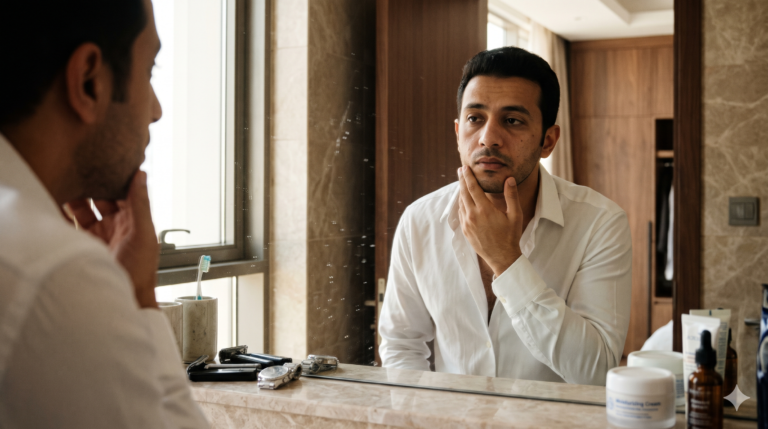
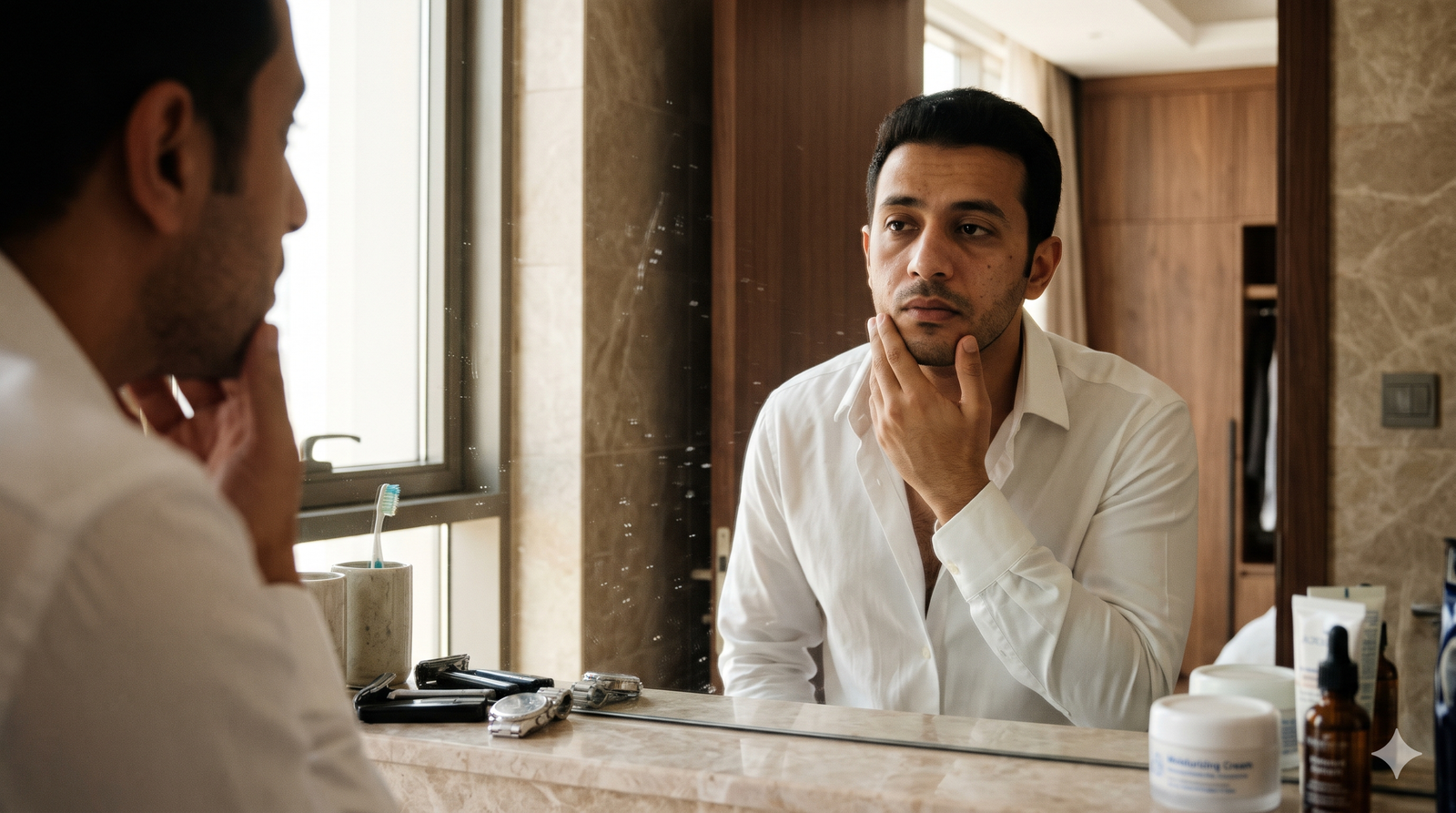
There is a specific kind of Monday morning that most UAE professionals have experienced at some point across Q4. You slept, or you tried to. You woke up looking somehow older and more tired than the hours you spent in bed should justify. The skin is slightly puffier than usual. The circles under the eyes are darker. The jawline has a new spot forming somewhere it has no business being on an adult. None of this is a skincare failure. All of it is cortisol, and cortisol skin health is the wellness conversation that October in the UAE makes more relevant and more visible than at any other point in the year.
What Cortisol Is Actually Doing to Your Skin and Why October Makes It Worse?
Cortisol is the body’s primary stress hormone, released by the adrenal glands in response to perceived threat or pressure and designed to prepare the body for short-term physical challenge. It is an essential and well-calibrated system in the context it evolved to serve. The problem for UAE professionals navigating Q4 targets, school term pressures, the social intensity of the returning autumn season, and the general demands of life in one of the world’s most fast-paced cities is that the cortisol system cannot distinguish between a genuine physical threat and a difficult performance review, a looming deadline, or a Sunday evening spent reviewing the week ahead. The result is a chronic low-level cortisol elevation that the skin reflects with remarkable and frustrating precision.
Collagen is the first casualty. Cortisol directly inhibits fibroblast activity, the cellular process through which the skin produces new collagen, while simultaneously activating enzymes called matrix metalloproteinases that break down existing collagen fibres. The visible consequence is the accelerated development of fine lines, reduced skin firmness, and the specific quality of skin that looks somehow less taut than it did a few months ago despite no meaningful change in diet, sleep, or skincare routine. For UAE women in particular, who often notice a visible deterioration in skin quality across October and November that they attribute to seasonal change, the underlying mechanism is frequently cortisol rather than weather, and addressing the source rather than the symptom is what produces genuine improvement.
Sebum production is the second visible consequence. Cortisol stimulates the sebaceous glands to produce more oil, creating the conditions for the hormonal adult breakouts that most dermatologists across Dubai are treating with increasing frequency among professional women in their thirties and forties. The pattern is distinctive: spots concentrated along the jawline and chin, arriving predictably during periods of elevated stress, persisting despite consistent cleansing, and failing to respond to the teenage acne treatments that most people instinctively reach for. Treating the breakout rather than the cortisol that caused it is the reason most adult hormonal acne responds poorly to topical treatments alone.
The skin barrier is the third and most fundamental casualty of chronic cortisol elevation. The skin barrier, the outermost protective layer of lipids and proteins that prevents water loss and blocks environmental irritants from penetrating deeper skin layers, is directly damaged by sustained cortisol elevation, becoming more permeable, more reactive, and less able to maintain the hydration levels that underpin all visible skin quality. The dullness, the sensitivity, the reactive redness, and the persistent dehydration that characterises UAE skin in October despite adequate water intake is frequently a cortisol-compromised barrier story rather than a product or hydration story.
The interventions that produce the most significant improvement in cortisol-driven skin deterioration operate at the level of the cortisol itself rather than the skin symptoms. The nervous system regulation practices covered in ICONIC Episode’s earlier wellness features, specifically the extended exhale breathwork technique and consistent movement, directly reduce cortisol production and produce measurable improvements in cortisol-driven skin inflammation within four to six weeks of consistent practice. Sleep protection is equally non-negotiable: cortisol follows a diurnal rhythm that is directly disrupted by insufficient sleep, with even a single night below seven hours producing a cortisol spike the following day that accelerates collagen breakdown and sebum production measurably. Adaptogenic supplements including ashwagandha, which has the strongest evidence base among adaptogens for directly lowering cortisol levels in chronically stressed populations, are now widely available across Dubai pharmacies and wellness clinics and consistently supported by research in exactly the population profile that most UAE professionals represent.
From a topical perspective, niacinamide applied morning and evening directly supports skin barrier repair and reduces the sebum overproduction that cortisol triggers. Ceramide-rich moisturisers replenish the lipid layer that chronic cortisol elevation depletes. And SPF, the single most collagen-protective topical intervention available, becomes even more important in October as UV exposure combines with cortisol-driven collagen breakdown to create a compounding effect on skin ageing that either factor alone would not produce.
This Sunday evening, before the week begins, the most effective skincare step available to any UAE professional is not a new product. It is the breathwork sequence, the protected sleep, and the honest assessment of how much the cortisol load of the past month has been visible not just on the face but in everything that face has been asked to carry.